
Business
WELSH STEEL CRISIS: COULD JOBS HAVE BEEN SAVED?

 IT WAS confirmed on Monday (Jan 18) that multinational steel giant Tata would be cutting more than 1000 jobs in the UK, with the vast majority of these losses occurring in south Wales.
750 jobs will be lost at the Strip Products UK business arm in Port Talbot, while 200 support functions staff will be laid off. A further 100 job losses will be shared between Trostre, Corby and Hartlepool.
The Chief Executive of Tata Steel Europe, Karl Koehler, said: “I know this news will be unsettling for all those affected, but these tough actions are critical in the face of extremely difficult market conditions which are expected to continue for the foreseeable future.
“We need the European Commission to accelerate its response to unfairly traded imports and increase the robustness of its actions. Not doing so threatens the future of the entire European steel industry. And while we welcome progress on UK energy costs, the Government must take urgent action to increase the competitiveness of the UK for its vital steel sector. This includes lowering business rates and supporting energy efficiency and anti-dumping cases so we can compete fairly.
“Tata Steel has been a hugely supportive investor, and has invested £1.5 billion in its UK operations. We now need all stakeholders to do their utmost to meet the unprecedented challenges the steel sector is facing.”
Stuart Wilkie, Director of Strip Products UK, added: “We have to accelerate the changes we announced last August, by lowering our costs at the same time as focusing on manufacturing higher-value products. These are urgent steps needed to give this business a chance of survival.
“We will work closely with affected employees and their trade union representatives. Retaining the right skills for the future will be critical, but we will look to minimise employee hardship and redeploy employees where possible.”
Job losses ‘a severe blow’
In a press conference held immediately after the announcement, First Minister Carwyn Jones said : “ This is a severe blow to the community and to steel production in the UK. “Our first thoughts today are with the families, communities and supply chain businesses which depend on steel production,” he added.
Mr Jones called on the UK Government to ‘step up and play its part ‘.
“It is time for swift, decisive action,” he added, before blaming ‘exorbitant’ energy costs, for which he laid the blame at the door of the UK Government, claiming that UK Ministers ‘should gave grasped this years ago ‘.
The First Minister added that a task force led by Economy Minister Edwina Hart would meet on Wednesday (Jan 20) to draw up an action plan to support Tata workers.
Secretary of State for Wales Stephen Crabb said that the UK Government was committed to working with Tata to make sure that they ‘remain a significant presence in south Wales’.
“Workers and their families at the plant face a deeply worrying time, and our priority is to help those likely to be affected,” Mr Crabb added.
“The UK government will keep doing what it can to support a steel industry suffering intense pressures from cheap steel imports and a global slump in prices.”
Numerous Plaid Cymru politicians have criticised the Welsh Labour Government for not doing more to protect the steel industry, as have opponents of all political hues.
Is nationalisation the answer?
Last Wednesday (Jan 13) Jonathan Edwards asked Mr Crabb in the House of Commons whether the steel industry could expect the same support as the last Labour Government offered to the financial sector in 2008:
“What contingency plans does the UK Government have for a worse-case scenario?” Mr Edwards wondered.
“Would he support a Welsh public stake in the Welsh operations of Tata, as was afforded to the banks of London during the financial crash of 2008?”
In reply, Mr Crabb refused to comment on the matter, saying only that there were ‘big issues and questions that need to be addressed ‘.
Speaking after the debate, Mr Edwards said: “The news of job losses at Port Talbot and Llanwern will be devastating for those affected and, of course, their families. If we are to avoid any further job losses then the Welsh Government must be prepared to act swiftly.
“The Port Talbot site is uniquely placed to be able to turn around its fortunes: Planning permission has already been granted for the development of an on-site power station that uses the gases emitted during production, and it is a stone’s throw away from a new Margam coal mine that could deliver much cheaper coking coal than current imports. The ingredients are there to significantly reduce the cost of operations but it needs the tools of government to realise its potential.
“In the event of Port Talbot and the rest of the Welsh steel industry facing imminent closure the Welsh Government must explore the option of part-nationalisation as an emergency measure to save jobs and create the space to put in place a turnaround strategy.
“We can’t look at one place in isolation. I know that jobs in Carmarthenshire rely on the supply chain of steel from Welsh plants. Were these sites to close, the ripple effect on our local economy and level of employment could be devastating.
“Nationalisation should be used judiciously as an option – it is not cost-free. But in areas of strategic importance it can be the right thing to do. It was done for the banks. Similar support should be afforded to the steel industry.”
A spokesperson for Plaid Cymru suggested that concern over EU State Aid rules was a ‘red herring’ as the rules don’t apply to nationalisation. They quoted two examples – the Ilva Steel plant in Italy which was temporarily nationalized in 2014 and is now on the market, and Salzgitter AG in Lower Saxony, which was nationalized in 1998, and remains Germany’s second-largest steel producer, making a solid return for the taxpayer.
However, Shadow Secretary of State for Wales Nia Griffith questioned whether partial nationalisation would make any difference: “In response to the Plaid Cymru’s calls for Welsh Government to ‘nationalise’, this would not resolve the issues because any ‘Welsh Steel Company’ would have exactly the same problems as TATA with the carbon tax, energy costs and lack of defence against Chinese imports and those are all issues which the UK Government should be tackling,” she added.
It is worth pointing out that the UK Government ruled out partial nationalisation when 2,500 jobs were lost in Redcar last year.
Speaking to The Herald, Plaid Cymru Assembly candidate Adam Price suggested that partial nationalisation would be aimed at avoiding ‘the meltdown scenario of Tata’s board in Mumbai deciding to close all their Welsh plants’.
Conservatives: EU should ‘show some teeth’
This view was, perhaps predictably, not shared by the Welsh Conservatives. Leader Andrew RT Davies, while acknowledging that the job losses would have a ‘devastating effect on the larger community’ said “let’s be clear, nationalisation is not the answer.”
Mr Davies claimed that his counterparts in Westminster would ‘continue to do all they can to bring down energy prices’ – something which is in stark contrast to the claims made by Welsh Labour – and concentrated on the ‘dumping of cheap Chinese steel’.
“Sadly a degree of restructuring looks inevitable in this instance, but for the steel industry to be viable going forward pressure must be placed on the European Union to repel the issue of dumping by China,” Mr Davies claimed.
“We are constantly force-fed the line that Britain benefits from being part of a bigger market in the form of the EU; well, it’s high time the European Union showed some teeth, because China’s domestic steel woes cannot be allowed to devastate Welsh jobs and to flood the UK market with cheap and in some instances sub-standard steel.”
It was left to Conservative Shadow Business Minister Will Graham AM to criticise the Welsh Government:
“Whilst many of the factors at play here are global in nature, the Welsh Government also has a job to do and Labour’s Minister has been slow to act on business rate relief, for example,” he claimed.
“There is also the small matter of £500 million which has been committed by the Conservatives at UK level for major infrastructure projects.
“It’s hard to imagine a better way to trigger legitimate demand for local steel, yet these much needed projects remain very much on the back burner under Welsh Labour.
“We would also like to see action from Welsh Government to implement procurement measures to ensure that all steel used in public sector contracts is of a British standard.”
The Lib Dems also suggested that the Welsh Government could have done more. Shadow Economy Minister Elunedd Parrott admitted that Chinese steel imports were causing a major problem:
“However, it’s not good enough for the Welsh Government just to sit back and blame everything on Westminster,” she added.
“Scrapping business rates on plant and machinery of course won’t solve all of the steel industry’s problems, but it’s a tool at Labour’s disposal that it has so far failed to use. The Welsh Liberal Democrats are the only party to have said we will completely scrap business rates on plant and machinery to support our steel industry.”
However, Mr Price claimed that the UK Government was sending ‘mixed messages’ regarding imports of Chinese steel:”These redundancies are certainly a response to current market conditions and we urgently need action at the European level to impose punitive unfair price tariffs – similar to the ones imposed by the US in the summer,” he claimed.
“The UK Government has sent mixed messages on this to the European Commission – supporting tariffs on steel on the one hand but also lobbying for China to be granted what’s called “market economy status” at the World Trade Organisation which would mean that punitive tariffs would no longer be possible. Effectively they are sacrificing the steel industry in order to court Chinese investment and markets in other areas.
EU ‘elephant in the room’
The news was greeted by Eurosceptics as clear evidence of the Welsh and UK Governments’ inability to protect British workers. UKIP Wales leader Nathan Gill MEP said: “It’s yet another devastating blow to Welsh workers, Welsh heavy industry and to the Welsh economy and shows how impotent the Assembly Government and Whitehall is.
“It’s so frustrating for me to look on while the Government is prevented from being able to do anything to reverse the situation, they can’t offer state aid, they are limited in reducing energy costs and they can’t act to prevent the dumping of cheap Chinese steel, all because of the EU, but it’s heartbreaking for the workers who now face the worst possible news.”
Pressure group Leave EU also claimed that the European Union was responsible for lost jobs in Wales:
Jack Montgomery, a spokesman for the campaign, said: “This latest round of job losses in Wales will set alarm bells ringing in Scotland and the north of England. Sadly, further losses are inevitable because the EU elephant in the room remains deliberately unaddressed. with the Welsh First Minister even going so far as to claim that the terrible problems faced by steel workers have ‘nothing to do with’ the EU last week.
“Well, the UK Steel Summit has identified three key problems facing the industry: high energy costs, the Chinese dumping steel on the export market below the cost of production, and restrictions on state aid.
“The first is a product of an energy policy the EU’s own Industry Commissioner warned was creating ‘a systemic industrial massacre’; the second we cannot action at the World Trade Organisation because Brussels has taken over our representation; the third results from ‘extremely strict’ EU rules which mean that, according to Industry Minister Anna Soubry, ‘our hands are tied’.
“Could EU supporters have their heads any deeper in the sand? Plainly, we need to get out of the Brussels straitjacket so we can tackle dumping head on WTO and give the industry the help it needs, without having to waste time begging for the Eurocrats’ permission first.”
Carbon tax hit steel industry – Nia Griffith
As Plaid Cymru pointed out, the EU State Aid rules do not apply to nationalised industries. The claim that Britain was powerless to do anything to reduce energy costs was vigorously refuted by Shadow Secretary of State for Wales Nia Griffith.
The Llanelli MP claimed that ‘so much more could have been done so much more quickly’ by the UK Government. “The industry has been very clear: it does not want hand-outs, but it wants a level playing field in order to survive in a highly competitive environment,” she pointed out.
“Back in 2010, the Chancellor hit the industry with the punishingly high carbon tax, a tax unique to the UK, which is not paid by any of our competitors, inside or outside the EU. In spite of calls from the industry, trade unions and Labour MPs, and even promises back in 2011 from the Chancellor himself of help for the energy intensive industries, he only confirmed this help a month ago, and it is now looking very much like too little too late.
“On the question of Chinese imports, even though the UK signed up to the renewal of specific anti-dumping measures in the summer, it is in fact the UK Government which is blocking further EU reform ( of the trade defence mechanisms) which would make it easier to keep Chinese steel out.
“At a time of low demand in the private sector, the UK Government should bring forward, not cancel or postpone, infrastructure projects, and make sure that we use British steel in them; that would help both the steel and construction industries, and keep up our skills base.The UK Government should sign up, as the Welsh Government has done, to the Charter for sustainable UK steel, and ensure that British steel is used in publicly funded projects.
“Most of the factors which directly affect the steel industry, such as the carbon tax and energy prices, are UK Government issues, but the Welsh Government should do all it can to support those who lose their jobs, and to continue to attract inward investment, and to create skilled jobs in particular.”
When asked if anything could have been done to mitigate the crisis faced by the Welsh steel industry, Ms Griffith said: “The UK Government certainly could have responded a lot more quickly to the asks of the industry: the Chancellor even admitted to the need to mitigate the effects of his high carbon tax back in 2010, but hid behind the smokescreen of getting state aid clearance from the EU instead of getting on with delivering the help.
“They could learn a lesson or two from the French and Spanish who are much more successful at stopping the dumping of cheap foreign imports, and ensuring that their own products are used in publicly procured contracts.”
Industry needs UK Government action – Unions
 Commenting on the announcement, Community’s General Secretary, Roy Rickhuss said:
“Our immediate thoughts are with all the steelworkers and their families who may be affected by today’s announcement. We will be doing all we can in the coming weeks to support our members at this difficult time. We will be vigorously challenging the company’s proposals to ensure they do not further weaken the integrity or capacity of our steel plants.
“Today’s announcement is no reflection of the skills and commitment of the Tata Steel workforce, which has been breaking production records over the past year. Rather, it is yet another chapter of the UK’s ongoing steel crisis and the lack of a proper government response.
“This industry needs meaningful action from the UK Government which up to now has been characterised by fast talking but slow delivery, despite persistent warnings from Community that delays in implementing support for steel would have an impact on jobs.
“Even now, promised compensation for energy intensive industries is yet to be received. The UK Government must step up and work with trade unions and businesses to ensure this industry exists for generations to come.
“The dumping of cheap Chinese steel is one of the biggest causes of this crisis, yet the UK Government remains a cheerleader for China and their bid for ‘market economy status’, which would decimate what’s left of our steel industry. This cannot be allowed to happen.
“As well as government support, it is absolutely vital that Tata Steel make clear their long-term commitment to steel making in the UK. The workforce has made significant sacrifices in recent years, on the assurance that jobs would be protected. However, rather than delivering on this promise, Tata have simply continued to slash jobs. Tata Steel must now come clean about their long term commitment to the UK. Community, as the steelworkers’ union, stands ready to play our part in securing a future for the industry.”
Alan Coombs, a Port Talbot steelworker and President of Community said: “Today‘s news is a tragic reminder of the UK’s ongoing steel crisis. Here in Port Talbot we make some of the world’s best steel, but cheap Chinese imports and high energy costs are crippling our industry.
“This announcement will affect everyone here – steelworkers, engineers and office staff. As the steelworkers’ union, Community is ready to work with Tata Steel to ensure that steel making remains at the heart of Port Talbot for many years to come. However, we will not accept anything that threatens the health and safety of workers or the integrity of the plant.
“Port Talbot is a town built on steel, my father and grandfathers worked here, but we risk losing these jobs forever without more action from government to create a level-playing field on which we can compete. Thousands of other families here in Port Talbot rely on the steelworks, it is a source of pride and employment for our town, we simply cannot afford to lose it.”
TUC General Secretary Frances O’ Grady also claimed that the UK Government needed to take action against cheap imported steel: “With the manufacturing sector now in recession, the last thing Britain needs is further damage to the steel industry,” she said.
“Steel is a foundation industry on which other sectors depend. Britain desperately needs a real industrial strategy. “Ministers in London need to wake up and smell the coffee. Cheap Chinese steel imports are wrecking the steel industry. The government must take measures to prevent China from dumping cheap steel on the world market.
“The British government can start by opposing the granting of market economy status to China, and by using business rates and procurement policy to protect this vital industry.”
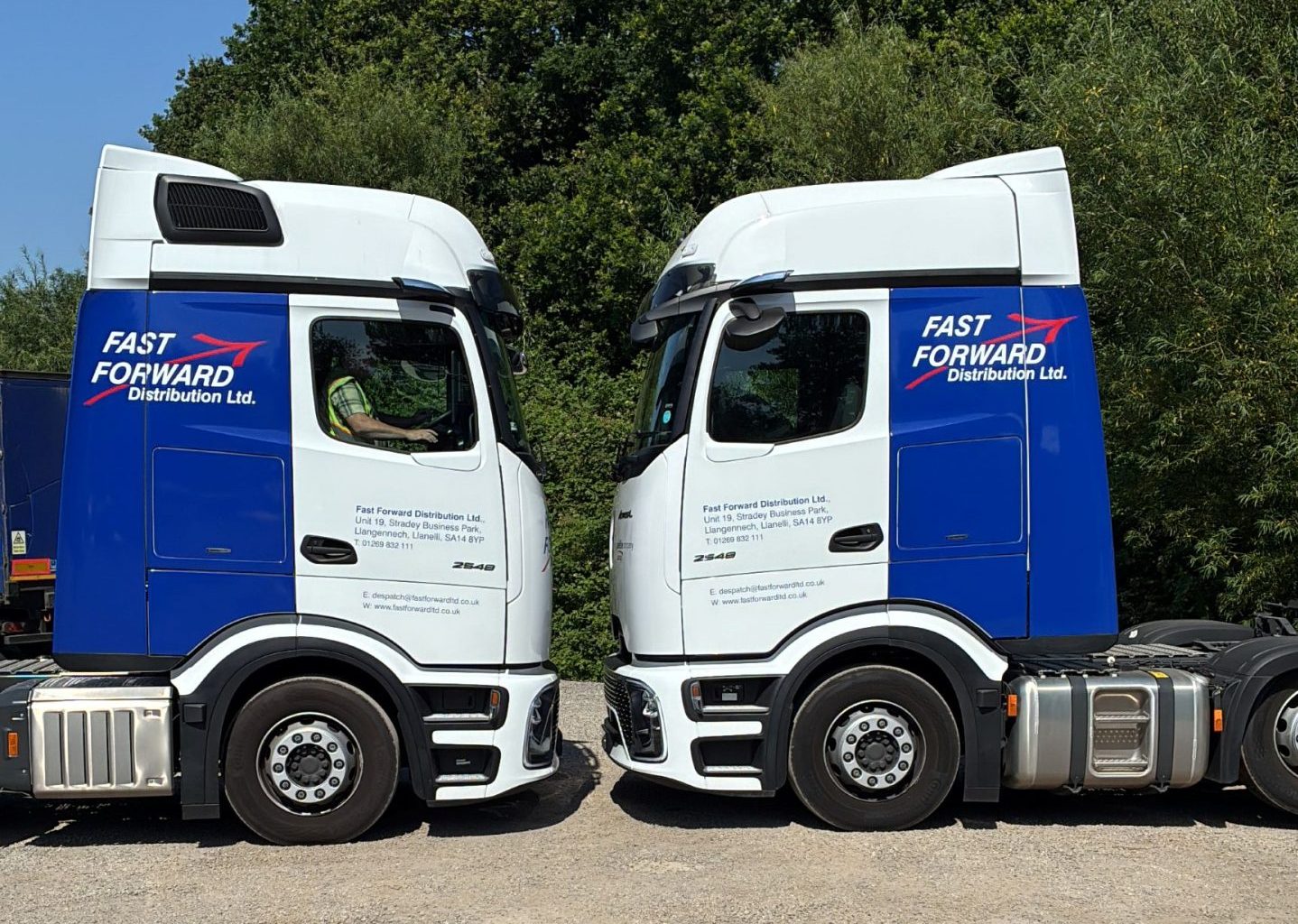
LLANELLI-based Fast Forward is building on its established palletised freight distribution business, with plans to expand into full-load services and increase its storage capacity as customer demand creates new opportunities.
A wholly owned Palletline business, Fast Forward is looking to extend its service offering while retaining its flexible and personal approach that has been the hallmark of the business.
Since joining as General Manager in January of this year, Jason Gaule has hit the ground running focusing on improving the operation and laying strong foundations for future growth.
Warehouse layouts and systems have been overhauled, loading processes streamlined and staffing levels designed to meet operational requirements. The business is also now fully staffed, reducing its reliance on agency workers.
These changes have improved efficiencies whilst providing Jason and his team a springboard from which to develop new opportunities, both within their established palletised freight offering and beyond.
“A number of changes have been made since I first joined, particularly in the warehouse by improving the layout and the way we load vehicles. It is about making the operation work better and smarter and getting the most out of the resources we have,” said Jason.
“Now we are looking at where we can take the business next. We have brought some previous customers back on board, we are winning new work and have a strong business pipeline.”
For Jason, these wins reflect the value of a service that is responsive to customers’; needs, backed by a team small enough to offer direct contact and flexibility when requirements change.
“We are a close-knit team, and customers know they can speak to us directly. If there is something they need help with, we will look at how we can make it work. That personal service and flexibility are a big part of what we offer, and we want to keep building on that.”
Looking ahead, one of Jason’s priorities is to develop Fast Forward’s full-load distribution capability. While the business handles some dedicated vehicle work, he sees an opportunity to build this into a more established service, using the vehicles and operational expertise already available to support customers moving full loads across the UK.
The intention is to complement the core palletised freight operation and maximising the use of the company’s vehicle assets. By developing both services, Fast Forward aims to offer customers greater choice, whether they need individual pallets distributed through the Palletline network or a dedicated vehicle for larger consignments.
Storage too has been earmarked as another potential area for growth and Jason is currently exploring the options available.
“It’s about growing in the right way. We want to continue to build on our core palletised freight business as well as further develop full-load distribution and other service offerings such as storage. There is a lot of potential and we want to develop that for the benefit of both the business and crucially our customers.”
Fast Forward’s customer base reflects the versatility of its operation, handling a broad mix of goods from televisions and pet food to building materials, garden products and seasonal agricultural supplies. This varied workload allows the business to support customers across different sectors, with the ability to adapt to changing volumes and requirements.
Jason brings more than 30 years of experience in logistics to the role. After starting his career as a postman, he established his own courier business, growing it from a single van into an operation serving major high street retailers across the UK, Ireland and Europe. He subsequently held a range of management and planning roles within the logistics sector before joining Fast Forward.
Fast Forward is now focused on building for the future while not losing sight of its core values. Jason added: “Our priority is to keep growing and developing our offering to customers. We have a strong foundation, a good team and customers who value the service we provide. By continuing to develop our palletised freight offering and expanding into full loads and storage, we can create more opportunities for the business and for our customers.”
THE UK’s most outstanding recent building projects went head-to-head for top national accolades at the RICS Awards Grand Final where Canolfan Pentre Awel was named Community Benefit Project of the Year and Severn View Park Care Home in Monmouthshire won in the Residential Development Project category.
The prestigious event, hosted by Tom Dyckhoff, writer, historian, teacher and broadcaster of cities, architecture, geographies and visual culture, and held at the Park Plaza London Westminster Bridge on Thursday 22nd October celebrates the UK’s most inspirational built projects that are having a significant positive impact on the communities they serve.
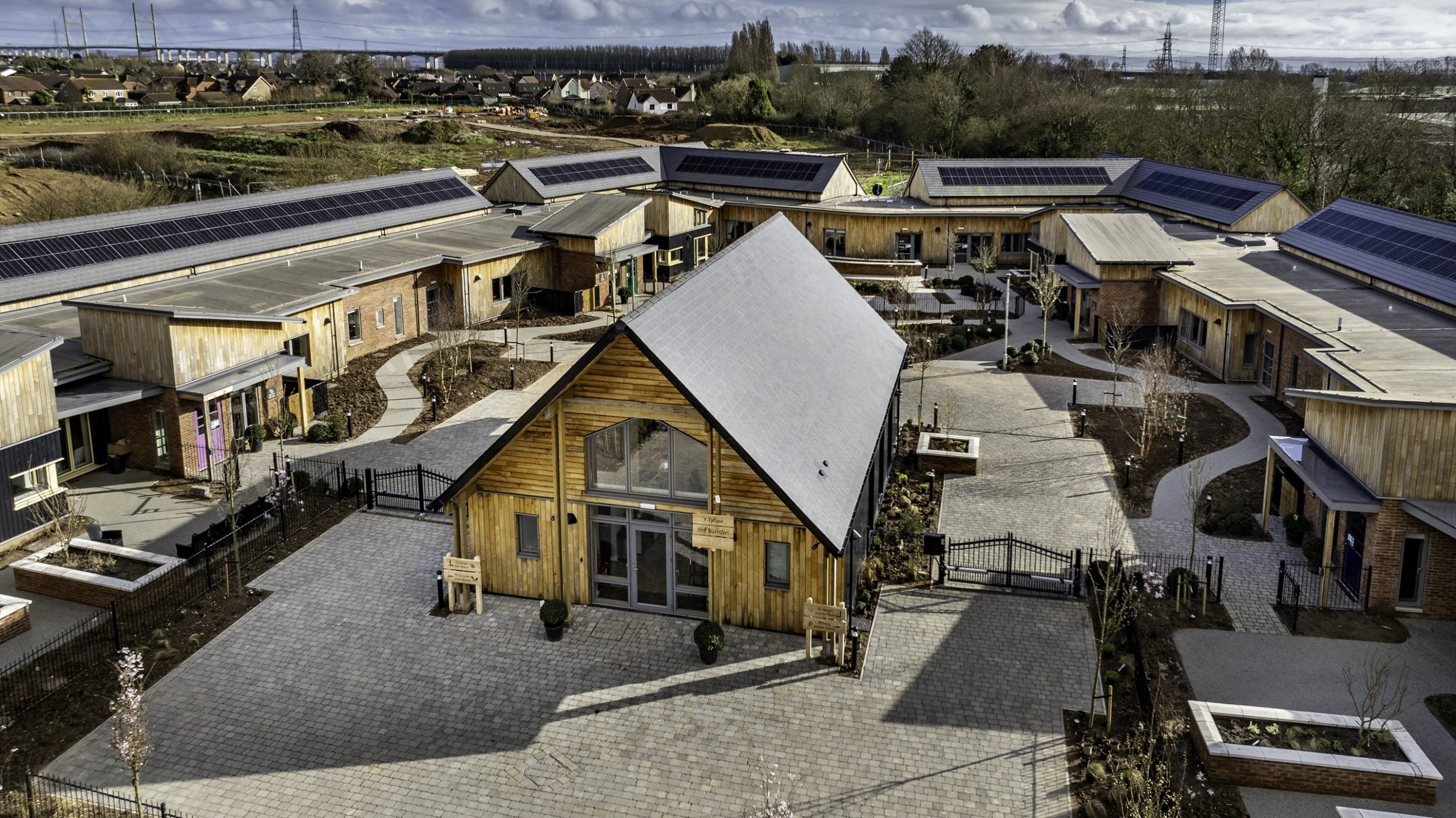
The Canolfan Pentre Awel project covers the design and construction of a 20,000m2 building (Canolfan) and associated landscaping, public realm and transport infrastructure.
This is the first phase of the Pentre Awel initiative in Llanelli, Carmarthenshire, forming a key project within the Swansea Bay City Deal portfolio and is designed to support people to lead active and healthier lives for longer.
Canolfan is home to a unique leisure offer, and community health care services, together with business and education opportunities.
Canolfan is a Carmarthenshire County Council (CCC) led development in partnership with HDdUHB, Cardiff University, Swansea University, University of Wales Trinity Saint David and Coleg Sir Gâr.
Commenting on Canolfan Pentre Awel, the judges said: “This project represents a bold and significant investment by The County Council in the health and wellbeing of residents of Llanelli and the surrounding areas.
The scale of the project coupled with careful design has resulted in a complex providing a wide range of high-quality leisure facilities together with a variety of spaces including a substantial health facility, various areas for community uses and businesses, with the emphasis on start-ups and growth. Altogether this is a most impressive and successful development in a deprived area of Wales.”
Severn View Park Care Home, delivered in partnership by Lovell, Monmouthshire County Council and Pentan Architects, is an innovative dementia‑focused residential care facility within the Elderwood Parc development.
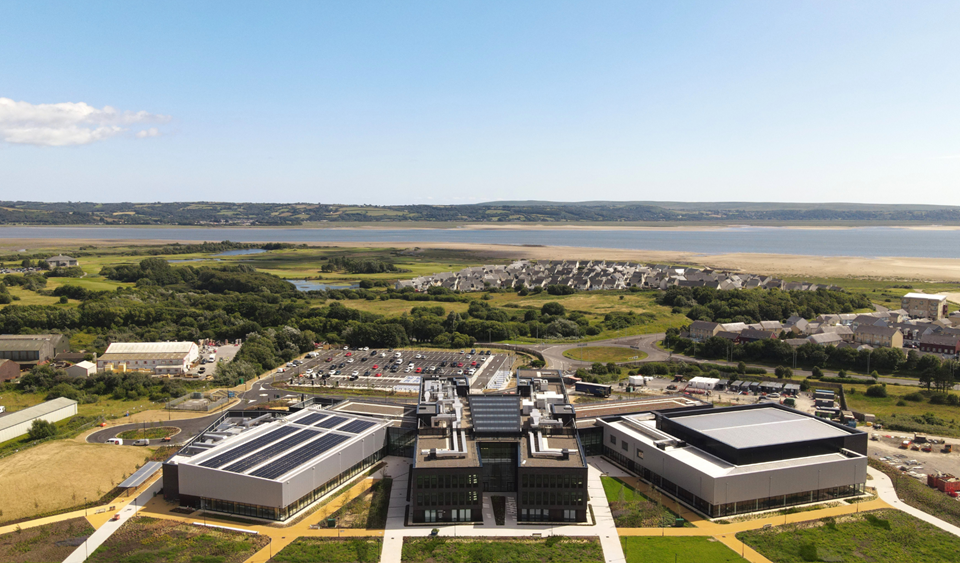
Designed to allow people living with dementia to continue “a life that matters”, the single‑storey home uses best‑practice dementia design, domestic‑scale households and a relationship‑centred care model.
Its community hall, gardens and allotments embed the home within the wider neighbourhood, promoting inclusion, engagement and wellbeing.
Commenting on the winning project, the judges said: “This exceptional residential project demonstrates outstanding achievement in the creation of high-quality homes that place residents, community and quality of life at the heart of the development. Through visionary collaboration, professional excellence and a shared commitment to delivering exceptional outcomes, the Client, Design Team, Contractor and wider stakeholders successfully overcame significant technical and operational challenges. The result is a residential environment that provides comfort, safety, security and a strong sense of belonging, while creating meaningful long-term social value. The community hub further enhances the development, providing a welcoming focal point for residents, schools, local groups and organisations. This project exemplifies residential excellence, demonstrating how thoughtful design, collaboration and community-focused delivery can create homes and places that have a lasting positive impact.”
The full list of winning projects at the UK Grand Final are:
- Belfast Grand Central Station – Project of the Year and Infrastructure Award
- No.1 St Michael’s, Manchester – Commercial Development project
- Canolfan Pentre Awel, Llanelli – Community Benefit project
- Farnborough Road, Clifton – Refurbishment/Revitalisation project
- HICSA – Housing Innovation & Construction Skills Academy – Public Sector project
- Severn View Park Care Home – Residential Development project
- Tesco Harrogate: Low Carbon Concept Store – Environmental Impact Award
- St Bart’s North Wing, London – Heritage project
- Calverleigh Wetlands, Devon – Land Management & Sustainable Development Award
- Lyndsey Milburn MRICS – Ambassador of the Year
- Sean Keyes – Lifetime Achievement Award
- Watsons Property Ltd – Outstanding Contribution to Surveying by a large firm
- b&m Construction Consultants – Outstanding Contribution to Surveying by an SME
Commenting on the awards, UK National Awards Chair, Kerry Gibbs FRICS, said: “It was an honour to judge these awards again, visiting these projects and seeing the profound impact that they’re having on their communities.
“Year on year we see such impressive teams and projects represented in these awards and 2026 was no different. Surveyors play such an important role in our built environment, and events like these awards are so important in recognising the hard work and dedication behind these projects. Congratulations to all of the winners, RICS is extremely proud to celebrate all of your exceptional achievements.”
This year’s awards have been sponsored by RIMKUS, IKO and Woolpert.
For further information on the RICS UK Awards please visit the RICS website.


Robert Pullen admits five shop thefts, an attempted steak theft and failing to surrender to bail
A LLANELLI man has admitted stealing almost £800 worth of goods from two supermarkets, but his case has been delayed following a nationwide failure of the courts’ video-link system.
Robert Pullen, 39, of no fixed abode, has pleaded guilty to five completed shop thefts involving Marks & Spencer and Asda in Llanelli, with goods valued at a combined £790.72.
The court records show four thefts of food from Marks & Spencer, with individual values of £243, £191, £130 and £129.50. Those items total £693.50.
A further charge relates to the theft of three bottles of vodka, valued at £97.22, from Asda in Murray Street on July 27.
Pullen has also admitted attempting to steal a number of steaks from the Marks & Spencer store at Parc Trostre on June 20. The court register does not give a value for the attempted theft.
In addition, he pleaded guilty to failing to surrender to court bail on July 30, having been released on bail at Llanelli Magistrates’ Court the previous day.
The case had been listed for sentence at Llanelli Magistrates’ Court on Tuesday (October 20). However, the official court result records that proceedings were adjourned because the Cloud Video Platform used for remote hearings was down nationally.
Pullen was remanded in custody and is due to return to Llanelli Magistrates’ Court on Thursday, October 22, for a further hearing. No sentence is recorded in Tuesday’s court report.
The Herald previously reported on the allegations involving Marks & Spencer. The latest records confirm guilty pleas to those thefts and provide details of further offences now being dealt with by the court.
-

 Community1 day ago
Llanelli Festival of Remembrance brings week to an emotional close
-

 News1 week ago
Gateway Resort owner loses appeals over glamping pods and clubhouse extensions
-

 Education5 days ago
Carmarthenshire councillors call for permanent nursing at special schools
-
 Business1 week ago
Fast Forward sets its sights on the next stage of growth
-

 Education3 weeks ago
BT Work Ready programme helps Llanelli pupils build skills for future careers
-

 Education2 weeks ago
Llanelli special school pupils welcome plans for larger school with outdoor space
-

 News2 weeks ago
Consultation opens on plans for eight new stations and expanded rail services
-

 News12 months ago
Llanelli Town AFC women’s team secures new sponsor