
News
Badger and the rural fantasy


ARCHIVE NOTE: This Badger comment column was first published in The Pembrokeshire Herald on Friday 9 October 2026. It was added to the Herald.Wales archive on 15 October 2026 and has not been updated.
IN A week in which the Green Party managed to turn itself into Oswald Mosley’s muesli-munching wet dream, Badger is tempted to go on an extended riff about how the SWP and its associated hangers-on have managed to capture that party in the same way they did to Labour when Jeremy Corbyn became its leader.
However, shooting fish in a barrel is no longer satisfying. That’s especially true when the potential target’s feeble-mindedness takes all the sport out of the exercise. When it comes to the Green Party, real fish in a real barrel would be harder to hit. Even at close range, with a bazooka.
Enough of the Tommy Robinsons in multi-colour knitwear. Away with them. Let’s leave them to march through their quinoa crops in their vegan leather jackboots.
Instead, Badger wants to consider matters far more immediately relevant to Pembrokeshire.
Pembrokeshire is a rural county. The M4 ends fifty miles away. The nearest large town is Llanelli, about the same distance away. Pembrokeshire’s resident population is also overwhelmingly pale, anglophone, and getting older. While it’s not God’s waiting room, it is waiting room adjacent.
As a rural county, Pembrokeshire has benefits and drawbacks.
The benefits are significant, readers. We are surrounded by history reaching back millennia. If you work in the main towns, you are a short drive from the best beaches in Britain, open countryside, and dramatic landscapes. When people say there is nothing to do in Pembrokeshire, it shows a lack of imagination and, likely, too much time glued to electronic devices.
The inconveniences also speak for themselves, mostly involving transport infrastructure, a lack of large four-season private-sector employment, and outdated healthcare facilities. Those are significant deficiencies, and there’s no denying that they take the gilt off the gingerbread, so to speak.
Two of those, the first and the last, are the result of decisions made outside Pembrokeshire which were informed by concepts of service delivery based on denser, more populated urban and suburban areas in the South East of Wales and South West of England. That’s not specific to Pembrokeshire; it’s the same for public services across the UK.
Pembrokeshire’s community is so insular that many believe bad things only ever happen here. Amazingly, readers, complaints about councils, councillors, hospital closures, and the whole panoply of things for which the unnamed “they” are to blame are as common as paranoid delusions among armlifters and conspiracists of all political stripes.
If Badger had to pick defining characteristics of Pembrokeshire locals, they’d be stubbornness and contrarianism. Badger rather likes being stubborn and contrarian, but then he grew up here. And while he relishes those personality traits, he’s also aware they can be self-limiting.
As for generalisations about others, Badger stops there.
Certainly, he wouldn’t go as far as suggesting rural life is the same throughout the whole UK. Crikey, readers, it’s not even the same across Pembrokeshire.
Jenny Riddell-Carpenter, Labour MP for Suffolk Coastal and (unbelievably) a DEFRA minister, sparked a storm-in-an-egg-cup-sized controversy by describing traditional rural imagery (such as “warm ale, village pubs, and black Labradors”) as a “far-right nostalgic vision of Britain”. Speaking at a Labour Party conference fringe event in Liverpool, Riddell-Carpenter warned against the “weaponisation” of the countryside and argued that an idealised version of rural life is being pushed as a political narrative.
Now, she has a point: has sort of got a point, anyway.
Badger is a very old mustelid. He remembers the mockery, entirely well-deserved, directed at John Major when he sought to allay fears of greater European integration by saying: “Fifty years on from now, Britain will still be the country of long shadows on county grounds, warm beer, invincible green suburbs, dog lovers, and—as George Orwell said—old maids bicycling to Holy Communion through the morning mist.”
John Major came out with that bilge in 1993. The ick of rose-tinted nostalgia for a Britain – let’s face it, readers, an England – was as lunatically misplaced then as it is now. It’s right up there with Rupert Brooke, seven decades earlier, plaintively asking, “stands the Church clock at ten-to-three/and is there honey still for tea?”
Honestly!
The imagery Rupert Brooke and John Major used to express themselves is not new. It’s not even uniquely English. Poets of Ancient Greece and Rome pined for imaginary rural idylls and bygone days of innocence and simplicity. Yes, readers, tedious archetypes of country life have been trite for millennia. Even Hesiod banged on about it, and the next stop after him in extant European literature is Homer.
That’s the thing with supposed idylls and golden eras: their sheen depends on perspective, class, and bias. For Rupert Brooke, the Old Vicarage, Grantchester, was an agreeable symbol of solidly upper-middle-class respectability, speaking of genteel permanence. A labourer in a field or a millworker would have seen it differently. John Major’s speech was trite, chocolate-box, sentimental tosh drawn from a well of insecurity.
Jenny Riddell-Carpenter’s speech speaks to her biases, her (very) English perspective, and her insecurities. Given Ms Riddell-Carpenter’s relatively small parliamentary majority, the nature of her constituency, and its rural component, “insecurity” is an operative word.
Like so much of politicians’ talk about rural communities, when it’s not shrouded in cod-romanticism, it’s marked by sneering urban attitudes.
There are pubs in Pembrokeshire villages, at least where old inns haven’t been converted to holiday lets. Some of those pubs allow dogs. Some of those dogs might even be black labradors. Many of them probably have warm beer. The idea that those factors, whether collectively or separately, constitute a “far-right” fantasy is demonstrable bollocks. Besides, to drink in some of Pembrokeshire’s more self-consciously olde-worlde hostelries, naming no names, but you know where they are, readers, you’d need to remortgage your house to buy a pie (gluten-free and vegan options available, may contain nuts) and a pint (Olde Fartwangler’s Nadger Whacker, it’s in the CAMRA Guide).
However, Badger will make one observation about Pembrokeshire’s pubs no matter where they are: a couple of pints in, it’s not only the views of the landscape that are breathtaking.

Review: Music, tribute and reflection at Ffwrnes Theatre, with Carmarthen Symphonic Wind Band, Meibion Elli and young local performers
Review by Robert Lloyd
It would be hard to think of a better way to end a week of Remembrance than this special festival staged at Llanelli’s Ffwrnes Theatre.
It was an evening which provided just the right measures of tribute, respect, dignity and emotion.
And it was fitting that it ended with a special presentation to Royal British Legion Llanelli branch president Ray Batsford, a veteran who has provided years of sterling service to the community.
The Llanelli branch of the RBL is in fine shape, on the evidence of a Poppy Appeal estimated to have raised £24,000 locally this year.
The branch’s organisation of the Festival of Remembrance was magnificent from start to finish, helped by the Rev Eldon Phillips as compère and Cerith Owens as artistic director.
The highlight of the evening was an impressive Drumhead Service of Remembrance, conducted by RBL Llanelli branch chaplain the Rev Delyth Richards. The silence was impeccably observed and there were many tears shed among the audience.
The festival was blessed with musical support from the Carmarthen Symphonic Wind Band, performing under the baton of their new musical director, Rhodri Rutherford.
On a day when Welsh pride and passion were well to the fore, it was appropriate that Meibion Elli should bring their own brand of powerful and emotional male voice singing to the stage.
The evening began with the muster of banners, with the symphonic band providing the musical background of Great Little Army and Arromanches.
Meibion Elli’s first set, under musical director D Eifion Thomas, included the powerhouse Gwahoddiad, the Welsh version of Anthem from Chess and the Elvis Presley classic Precious Lord. The featured soloist was award-winning baritone John ‘Pontyberem’ Thomas.
The first soloist of the evening was Scott Holmes, a member of the Llanelli-based Loud Applause Rising Stars team. He was totally tuned in to the emotion of the evening with performances of Bui Doi (Dust of Life) from Miss Saigon and the classic Empty Chairs at Empty Tables from Les Misérables.
The youngsters of Ysgol Bryngwyn Comprehensive School, drawn from Years 7 to 11, were a delight, with a set which included When I Grow Up from Matilda and John Lennon’s classic Imagine.
The Carmarthen Symphonic Wind Band took centre stage with The Great Escape, Tell My Father, featuring Rhodri Rutherford, Dafydd y Garreg Wen and Jitterbug.
Soloist Betsan Daniel, also a member of Loud Applause Rising Stars, was a late replacement for the unwell Lauren Elizabeth Williams, but she displayed wonderful composure with A Nightingale Sang in Berkeley Square and Adre, the celebrated Caryl Parry Jones tear-jerker.
The wind band stirred the soul with Elgar’s Nimrod, before Meibion Elli concluded with You’ll Never Walk Alone, Ashokan Farewell and The Mansions of the Lord.
David Blewitt, pipe major of the City of Swansea Pipe Band, provided bagpipe accompaniment to the Service of Remembrance, which included the hymns Efengyl Tangnefedd and O God, Our Help in Ages Past.
There were prayers before the Exhortation, the Last Post, the Silence and the Kohima Epitaph. The festival also featured an emotional poetry reading by Welsh Guards veteran Chris Beynon and a short speech by Geraint Davies reflecting on the Iraq War.

Find out more about the Royal British Legion’s work locally on the Friends of The Royal British Legion – Llanelli Branch Facebook page.
Main image: The Rev Delyth Richards conducts the Drumhead Service of Remembrance at Ffwrnes Theatre, Llanelli (Image supplied).
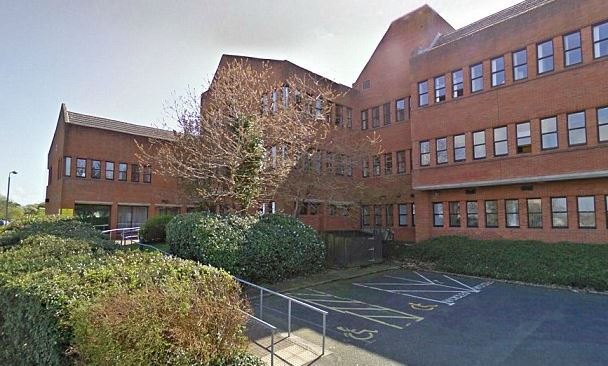
Jay Francis Cockburn was sentenced to 12 weeks after admitting a breach involving missed probation and treatment appointments
A DRUG-DRIVER has been jailed for 12 weeks after repeatedly failing to comply with a community order imposed for offences in Ceredigion.
Jay Francis Cockburn, 35, of no fixed abode, admitted the breach at a hearing on Monday (November 9).
He was at Haverfordwest courthouse but appeared before a Llanelli magistrates’ bench, according to the court register.
The proceedings concerned a community order made at Aberystwyth Magistrates’ Court on July 1. Cockburn had been convicted in October 2025 of two drug-driving offences arising from the same incident at Llanafan on July 3 that year.
He had driven a Ford Mondeo with controlled substances in his blood above the specified limits.
The breach proceedings listed failures to comply with a planned home visit on August 4, a drug rehabilitation appointment on October 2 and supervision appointments on October 6, October 20 and November 3.
Magistrates revoked the community order and re-sentenced Cockburn for the original offences, imposing two 12-week prison terms to run at the same time.
In their recorded reasons, the bench described his failure to comply as wilful and persistent and said the driving could have had devastating consequences.
The court concluded that his failure to comply with previous community orders for the offence demonstrated an unwillingness to engage with probation, and that the prison sentence could not be suspended.
No order was made for costs.

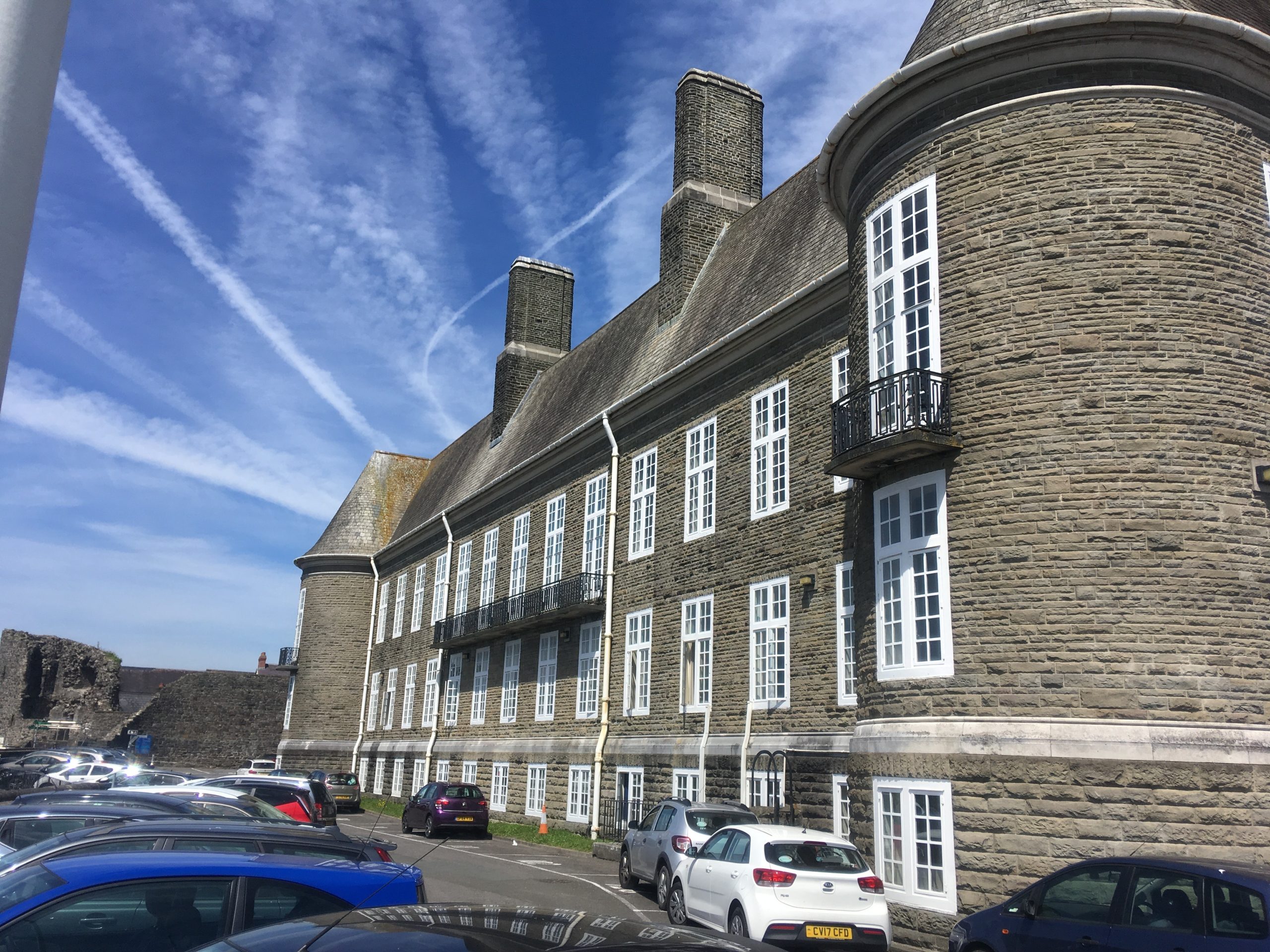
Carmarthenshire Council’s HQ at County Hall (Pic: Richard Youle)
Councillors seek an urgent plan with Hywel Dda to provide nursing support for pupils with complex medical needs
PERMANENT nursing should be available at all specialist additional learning needs (ALN) facilities in Carmarthenshire, according to councillors.
They backed a motion brought by Labour councillors Martyn Palfreman and Edward Skinner which said pupils in such venues often needed complex medical interventions during the school day.
“These include tube feeding, catheterisation, tracheotomy care, monitoring and responding to seizures, and the timely administration of prescribed rescue medication,” it said.
“Despite the dedication of educational staff in such establishments, who provide outstanding care for pupils and have undertaken training to meet individual healthcare needs, it should be recognised that they are not medically qualified.
“As such, they should not be expected to be responsible for recognising clinical deterioration, assessing complex medical symptoms or responding to potentially life-threatening medical emergencies that arise during school time.”
There was particular focus on Ysgol Heol Goffa, Llanelli, where many pupils have very complex needs and where, according to the motion, the head teacher has sought permanent onsite nursing provision for more than five years.
“Parents have expressed serious and continuing anxiety about the safety of their children in the absence of a registered nurse permanently based on site,” it said.
Discussions have taken place between the council and Hywel Dda University Health Board and the motion called for an urgent meeting between them and other parties in a bid to agree a “funded and time-bound plan”.
The motion also said a jointly-commissioned clinical risk assessment for every pupil with complex or life-limiting medical needs should be done immediately.
Speaking at a meeting of full council Cllr Palfreman said providing the right support could in some cases “can be a matter of life or death”. He and others praised the work of teachers and teaching assistants.
Cllr Crish Davies said: “Every parent deserves peace of mind that comes from knowing that their child is in safe hands.” Some of them, she said, lived with worries “we can barely imagine”.
Cllr Deryk Cundy said five children at a special school had palliative care, seven had feeding valves, three had shunts, and 22 had epilepsy. He added that many children could not articulate their concerns.
Cllr Gareth John said he supported the motion with two reservations – that it was logical for the outcome of discussions between the council and the health board to reach an outcome before cabinet discussed the motion, should it be approved, and an acknowledgement the council could lobby but couldn’t create a health workforce “that may not even exist”.
Cllr Jane Tremlett, cabinet member for integrated health and children and adult services, said: “Every child with complex needs should be able to attend school safely, with dignity and with confidence that the appropriate support is available if they need it.”
She said school staff shouldn’t be expected to be healthcare professionals. “We need absolutely clarity about where professional responsibility sits and how that provision is commissioned and funded,” she said.
She said different schools might need different models of provision, and added: “What matters is it’s safe, clinically approved and sustainable.”
Cllr Glynog Davies, cabinet member for education, called on the health board “to take up their responsibility seriously” and said the Welsh Government should provide clarity on what they expected councils to provide.
Responding to the motion, Sharon Daniel, director of nursing, quality and patient experience at Hywel Dda University Health Board, said: “The health and wellbeing of all children and young people is fundamental to their ability to learn, thrive and reach their potential, and is a priority for us.
“We support the children and young people at Ysgol Heol Goffa with a specialist/community children nursing service to meet their universal health needs, and through the provision of training for staff at the school.
“We provide specialist support, ensuring each child and young person with healthcare needs can be cared for competently and confidently within the school environment. Through continued partnership working and a shared commitment to improvement, we will support ongoing actions to strengthen provision and ensure the best possible outcomes for the pupils and staff at Ysgol Heol Goffa.”
-

 Community1 day ago
Llanelli Festival of Remembrance brings week to an emotional close
-
 News1 week ago
Gateway Resort owner loses appeals over glamping pods and clubhouse extensions
-
 Education4 days ago
Carmarthenshire councillors call for permanent nursing at special schools
-

 Education3 weeks ago
BT Work Ready programme helps Llanelli pupils build skills for future careers
-

 Education1 week ago
Llanelli special school pupils welcome plans for larger school with outdoor space
-

 Business1 week ago
Fast Forward sets its sights on the next stage of growth
-

 Community3 months ago
Llanelli’s dated office block to become affordable flats with rooftop garden
-
 News12 months ago
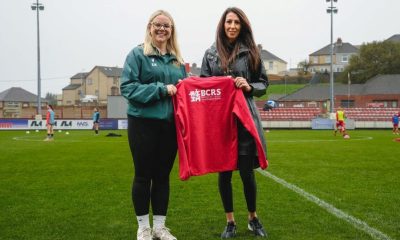
Llanelli Town AFC women’s team secures new sponsor