
News
Wales tops UK’s rainiest places as El Niño could make things worse


THE PARTS of the UK that usually receive the most rain during autumn have been revealed, at a time when the country could be heading into a much wetter end to the year. Neath is the UK’s rainiest place during autumn, averaging 616.6mm between September and November. Eight of the 15 wettest locations are in Wales, including Merthyr Tydfil, Rhondda, Bridgend and Swansea.
The Met Office has warned that the El Niño developing in the Pacific may be the strongest for more than a century. Its effects are expected to be felt around the world and, for the UK, forecasters are seeing signs of increased rainfall and stormier weather around November.
This follows an exceptionally hot and dry summer which left much of England and all of Wales in drought. While a wetter autumn would help replenish water supplies, sudden or sustained rainfall after months of dry weather may also bring issues for homeowners.
With this in mind, leak detection specialists ADI Leak Detection analysed average September to November rainfall across 305 UK cities and large towns, using figures from 2020 to 2025.
The 15 wettest UK places during autumn
| Rank | Place | Country | Region | Average September-November rainfall 2020-2025 (mm) |
| 1 | Neath | Wales | Wales | 616.6 |
| 2 | Merthyr Tydfil | Wales | Wales | 568.4 |
| 3 | Kendal | England | North West | 553.4 |
| 4 | Rhondda | Wales | Wales | 550.0 |
| 5 | Bridgend | Wales | Wales | 534.7 |
| 6 | Llanelli | Wales | Wales | 528.0 |
| 7 | Swansea | Wales | Wales | 526.4 |
| 8 | Barrow-in-Furness | England | North West | 522.1 |
| 9 | Irvine | Scotland | Scotland | 519.3 |
| 10 | Lancaster | England | North West | 514.4 |
| 11 | Greenock | Scotland | Scotland | 503.2 |
| 12 | Kilmarnock | Scotland | Scotland | 474.4 |
| 13 | Ebbw Vale | Wales | Wales | 472.0 |
| 14 | Morecambe | England | North West | 470.5 |
| 15 | Pontypool | Wales | Wales | 451.6 |
Neath is the UK’s rainiest place during autumn, receiving an average of 616.6mm between September and November. It is the only location in the study to pass 600mm and receives 48.2mm more than anywhere else in the ranking.
Second place goes to Merthyr Tydfil, where an average autumn brings 568.4mm of rain. This is around 8% less than Neath, but still 15mm more than the highest-ranking location outside Wales.
That location is Kendal, which places third overall and first in England with 553.4mm. The Cumbrian town narrowly finishes ahead of Rhondda in fourth. Rhondda averages 550mm, leaving only 3.4mm between the two.
Another two Welsh locations come next. Bridgend places fifth with 534.7mm, while Llanelli ranks sixth on 528mm. The difference between them is only 6.7mm across the whole three-month period.
Nearby Swansea follows in seventh place, averaging 526.4mm. That puts three South Wales locations in a very close group: less than 8.5mm separates Bridgend, Llanelli and Swansea.
Barrow-in-Furness is the second English entry in the table and ranks eighth overall with 522.1mm. It receives around 31mm less than Kendal, the other Cumbrian location in the top 15.
The highest-ranked Scottish location is Irvine, which places ninth with an average of 519.3mm. It is followed by Lancaster in tenth on 514.4mm, meaning less than 8mm separates the locations in eighth, ninth and tenth.
At number 11, Greenock receives 503.2mm during a typical autumn. It is the final location in the ranking with an average above 500mm and records 28.8mm more than Kilmarnock, which places 12th with 474.4mm.
The next two are almost level. Ebbw Vale ranks 13th on 472mm, with Morecambe just 1.5mm behind on 470.5mm. Morecambe is also the fourth North West location to appear, alongside Kendal, Barrow-in-Furness and Lancaster.
Pontypool completes the top 15 with an average of 451.6mm. Its inclusion means eight of the 15 rainiest locations are in Wales. Four are in North West England and the remaining three are in Scotland.
There is a fairly obvious westward pattern to the results, but the small gaps between some locations are important. Places such as Kendal and Rhondda, or Bridgend, Llanelli and Swansea, have very similar averages and should not be treated as having dramatically different autumn conditions simply because they sit a few positions apart.
The 10 driest UK places during autumn
| Rank | Place | Country | Region | Average September-November rainfall 2020-2025 (mm) |
| 1 | Clacton-on-Sea | England | East of England | 199.6 |
| 2 | Cambridge | England | East of England | 199.9 |
| 3 | Ipswich | England | East of England | 200.0 |
| 4 | Colchester | England | East of England | 204.9 |
| 5 | Bury St Edmunds | England | East of England | 206.5 |
| =6 | Canvey Island | England | East of England | 209.3 |
| =6 | Ely | England | East of England | 209.3 |
| 7 | Letchworth Garden City | England | East of England | 213.2 |
| 8 | Chelmsford | England | East of England | 213.7 |
| 9 | Basildon | England | East of England | 214.7 |
| 10 | Sittingbourne | England | South East | 215.4 |
At the other end of the study, Clacton-on-Sea is the UK’s driest place during autumn with an average of 199.6mm. However, there is almost nothing between the first three places. Cambridge follows with 199.9mm, while Ipswich receives an even 200mm.
Only 0.4mm separates Clacton-on-Sea and Ipswich when rainfall is averaged across six autumns. In practical terms, the three locations experience extremely similar levels of rain, even though the table has to place them in an order.
Colchester ranks fourth driest with 204.9mm, followed by Bury St Edmunds on 206.5mm. Both remain close to the 200mm mark, with Bury St Edmunds receiving only 6.9mm more than Clacton-on-Sea across the season.
Canvey Island and Ely share sixth place, each averaging 209.3mm. Their identical figures reflect separate weather grid cells that returned the same six-year average, rather than the two places sharing one reading.
The figures remain close further down the table. Letchworth Garden City ranks seventh driest with 213.2mm, Chelmsford follows in eighth on 213.7mm, and Basildon places ninth with 214.7mm.
Sittingbourne completes the bottom ten, averaging 215.4mm between September and November. It is the only South East location in this section, with each of the other ten entries found in the East of England.
Only 15.8mm separates the whole group. The contrast with Neath is much larger: the Welsh town receives 417mm more rain during an average autumn, or just over three times the total recorded in Clacton-on-Sea.
Peter Jones, Director at ADI Leak Detection, said: “Going from such a dry summer into a potentially wet and stormy autumn is something homeowners should take seriously. It does not mean every forecast downpour will cause a problem, but it is much better to find a loose roof tile or blocked drain now than during several hours of heavy rain.
“The El Niño reports are especially relevant because the signal for the UK appears to be stronger around November. That gives people some time to prepare. Gutters will also begin filling with leaves during the same period, so a drainage system which coped perfectly well in summer may struggle once rain becomes heavier and more frequent.
“After a prolonged dry spell, the ground may be hard and less able to absorb a sudden volume of water. Rain can then run towards the house, collect near external walls or overwhelm a drain surprisingly quickly. Check that gullies are clear and that downpipes are actually carrying water away rather than spilling it beside the property.
“I would also look around windows, doors and visible roof areas for small gaps, worn seals or damage. You do not need to climb onto the roof yourself. A visual check from the ground can still pick up a slipped tile, and anything higher up should be left to somebody with the right equipment.
“Indoors, the early signs are not always a dramatic stream of water. It may be a faint damp mark, paint beginning to bubble, a musty smell in one room or a patch which returns after being cleaned. If it appears after rain, make a note of the weather and take a photo. That timing can help narrow down where the water is entering.
“Even the places at the dry end of this table still average around 200mm over autumn. More importantly, an average says nothing about how quickly that rain falls. One intense storm can expose a weakness in any home, so residents in Clacton, Cambridge or Ipswich should not assume the El Niño warning only matters to traditionally wetter parts of Wales, Scotland or North West England.”


Review: Music, tribute and reflection at Ffwrnes Theatre, with Carmarthen Symphonic Wind Band, Meibion Elli and young local performers
Review by Robert Lloyd
It would be hard to think of a better way to end a week of Remembrance than this special festival staged at Llanelli’s Ffwrnes Theatre.
It was an evening which provided just the right measures of tribute, respect, dignity and emotion.
And it was fitting that it ended with a special presentation to Royal British Legion Llanelli branch president Ray Batsford, a veteran who has provided years of sterling service to the community.
The Llanelli branch of the RBL is in fine shape, on the evidence of a Poppy Appeal estimated to have raised £24,000 locally this year.
The branch’s organisation of the Festival of Remembrance was magnificent from start to finish, helped by the Rev Eldon Phillips as compère and Cerith Owens as artistic director.
The highlight of the evening was an impressive Drumhead Service of Remembrance, conducted by RBL Llanelli branch chaplain the Rev Delyth Richards. The silence was impeccably observed and there were many tears shed among the audience.
The festival was blessed with musical support from the Carmarthen Symphonic Wind Band, performing under the baton of their new musical director, Rhodri Rutherford.
On a day when Welsh pride and passion were well to the fore, it was appropriate that Meibion Elli should bring their own brand of powerful and emotional male voice singing to the stage.
The evening began with the muster of banners, with the symphonic band providing the musical background of Great Little Army and Arromanches.
Meibion Elli’s first set, under musical director D Eifion Thomas, included the powerhouse Gwahoddiad, the Welsh version of Anthem from Chess and the Elvis Presley classic Precious Lord. The featured soloist was award-winning baritone John ‘Pontyberem’ Thomas.
The first soloist of the evening was Scott Holmes, a member of the Llanelli-based Loud Applause Rising Stars team. He was totally tuned in to the emotion of the evening with performances of Bui Doi (Dust of Life) from Miss Saigon and the classic Empty Chairs at Empty Tables from Les Misérables.
The youngsters of Ysgol Bryngwyn Comprehensive School, drawn from Years 7 to 11, were a delight, with a set which included When I Grow Up from Matilda and John Lennon’s classic Imagine.
The Carmarthen Symphonic Wind Band took centre stage with The Great Escape, Tell My Father, featuring Rhodri Rutherford, Dafydd y Garreg Wen and Jitterbug.
Soloist Betsan Daniel, also a member of Loud Applause Rising Stars, was a late replacement for the unwell Lauren Elizabeth Williams, but she displayed wonderful composure with A Nightingale Sang in Berkeley Square and Adre, the celebrated Caryl Parry Jones tear-jerker.
The wind band stirred the soul with Elgar’s Nimrod, before Meibion Elli concluded with You’ll Never Walk Alone, Ashokan Farewell and The Mansions of the Lord.
David Blewitt, pipe major of the City of Swansea Pipe Band, provided bagpipe accompaniment to the Service of Remembrance, which included the hymns Efengyl Tangnefedd and O God, Our Help in Ages Past.
There were prayers before the Exhortation, the Last Post, the Silence and the Kohima Epitaph. The festival also featured an emotional poetry reading by Welsh Guards veteran Chris Beynon and a short speech by Geraint Davies reflecting on the Iraq War.

Find out more about the Royal British Legion’s work locally on the Friends of The Royal British Legion – Llanelli Branch Facebook page.
Main image: The Rev Delyth Richards conducts the Drumhead Service of Remembrance at Ffwrnes Theatre, Llanelli (Image supplied).
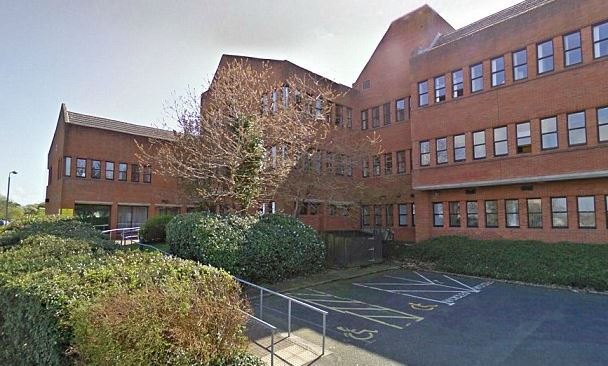
Jay Francis Cockburn was sentenced to 12 weeks after admitting a breach involving missed probation and treatment appointments
A DRUG-DRIVER has been jailed for 12 weeks after repeatedly failing to comply with a community order imposed for offences in Ceredigion.
Jay Francis Cockburn, 35, of no fixed abode, admitted the breach at a hearing on Monday (November 9).
He was at Haverfordwest courthouse but appeared before a Llanelli magistrates’ bench, according to the court register.
The proceedings concerned a community order made at Aberystwyth Magistrates’ Court on July 1. Cockburn had been convicted in October 2025 of two drug-driving offences arising from the same incident at Llanafan on July 3 that year.
He had driven a Ford Mondeo with controlled substances in his blood above the specified limits.
The breach proceedings listed failures to comply with a planned home visit on August 4, a drug rehabilitation appointment on October 2 and supervision appointments on October 6, October 20 and November 3.
Magistrates revoked the community order and re-sentenced Cockburn for the original offences, imposing two 12-week prison terms to run at the same time.
In their recorded reasons, the bench described his failure to comply as wilful and persistent and said the driving could have had devastating consequences.
The court concluded that his failure to comply with previous community orders for the offence demonstrated an unwillingness to engage with probation, and that the prison sentence could not be suspended.
No order was made for costs.


Carmarthenshire Council’s HQ at County Hall (Pic: Richard Youle)
Councillors seek an urgent plan with Hywel Dda to provide nursing support for pupils with complex medical needs
PERMANENT nursing should be available at all specialist additional learning needs (ALN) facilities in Carmarthenshire, according to councillors.
They backed a motion brought by Labour councillors Martyn Palfreman and Edward Skinner which said pupils in such venues often needed complex medical interventions during the school day.
“These include tube feeding, catheterisation, tracheotomy care, monitoring and responding to seizures, and the timely administration of prescribed rescue medication,” it said.
“Despite the dedication of educational staff in such establishments, who provide outstanding care for pupils and have undertaken training to meet individual healthcare needs, it should be recognised that they are not medically qualified.
“As such, they should not be expected to be responsible for recognising clinical deterioration, assessing complex medical symptoms or responding to potentially life-threatening medical emergencies that arise during school time.”
There was particular focus on Ysgol Heol Goffa, Llanelli, where many pupils have very complex needs and where, according to the motion, the head teacher has sought permanent onsite nursing provision for more than five years.
“Parents have expressed serious and continuing anxiety about the safety of their children in the absence of a registered nurse permanently based on site,” it said.
Discussions have taken place between the council and Hywel Dda University Health Board and the motion called for an urgent meeting between them and other parties in a bid to agree a “funded and time-bound plan”.
The motion also said a jointly-commissioned clinical risk assessment for every pupil with complex or life-limiting medical needs should be done immediately.
Speaking at a meeting of full council Cllr Palfreman said providing the right support could in some cases “can be a matter of life or death”. He and others praised the work of teachers and teaching assistants.
Cllr Crish Davies said: “Every parent deserves peace of mind that comes from knowing that their child is in safe hands.” Some of them, she said, lived with worries “we can barely imagine”.
Cllr Deryk Cundy said five children at a special school had palliative care, seven had feeding valves, three had shunts, and 22 had epilepsy. He added that many children could not articulate their concerns.
Cllr Gareth John said he supported the motion with two reservations – that it was logical for the outcome of discussions between the council and the health board to reach an outcome before cabinet discussed the motion, should it be approved, and an acknowledgement the council could lobby but couldn’t create a health workforce “that may not even exist”.
Cllr Jane Tremlett, cabinet member for integrated health and children and adult services, said: “Every child with complex needs should be able to attend school safely, with dignity and with confidence that the appropriate support is available if they need it.”
She said school staff shouldn’t be expected to be healthcare professionals. “We need absolutely clarity about where professional responsibility sits and how that provision is commissioned and funded,” she said.
She said different schools might need different models of provision, and added: “What matters is it’s safe, clinically approved and sustainable.”
Cllr Glynog Davies, cabinet member for education, called on the health board “to take up their responsibility seriously” and said the Welsh Government should provide clarity on what they expected councils to provide.
Responding to the motion, Sharon Daniel, director of nursing, quality and patient experience at Hywel Dda University Health Board, said: “The health and wellbeing of all children and young people is fundamental to their ability to learn, thrive and reach their potential, and is a priority for us.
“We support the children and young people at Ysgol Heol Goffa with a specialist/community children nursing service to meet their universal health needs, and through the provision of training for staff at the school.
“We provide specialist support, ensuring each child and young person with healthcare needs can be cared for competently and confidently within the school environment. Through continued partnership working and a shared commitment to improvement, we will support ongoing actions to strengthen provision and ensure the best possible outcomes for the pupils and staff at Ysgol Heol Goffa.”
-

 Community1 day ago
Llanelli Festival of Remembrance brings week to an emotional close
-

 News1 week ago
Gateway Resort owner loses appeals over glamping pods and clubhouse extensions
-

 Education4 days ago
Carmarthenshire councillors call for permanent nursing at special schools
-

 Education3 weeks ago
BT Work Ready programme helps Llanelli pupils build skills for future careers
-

 Education1 week ago
Llanelli special school pupils welcome plans for larger school with outdoor space
-

 Business1 week ago
Fast Forward sets its sights on the next stage of growth
-
 News12 months ago
Llanelli Town AFC women’s team secures new sponsor
-

 News8 months ago
Boxer plans move to Llanelli church to expand community club