
News
UK at risk of climate tipping points amid sea level rise and extreme weather

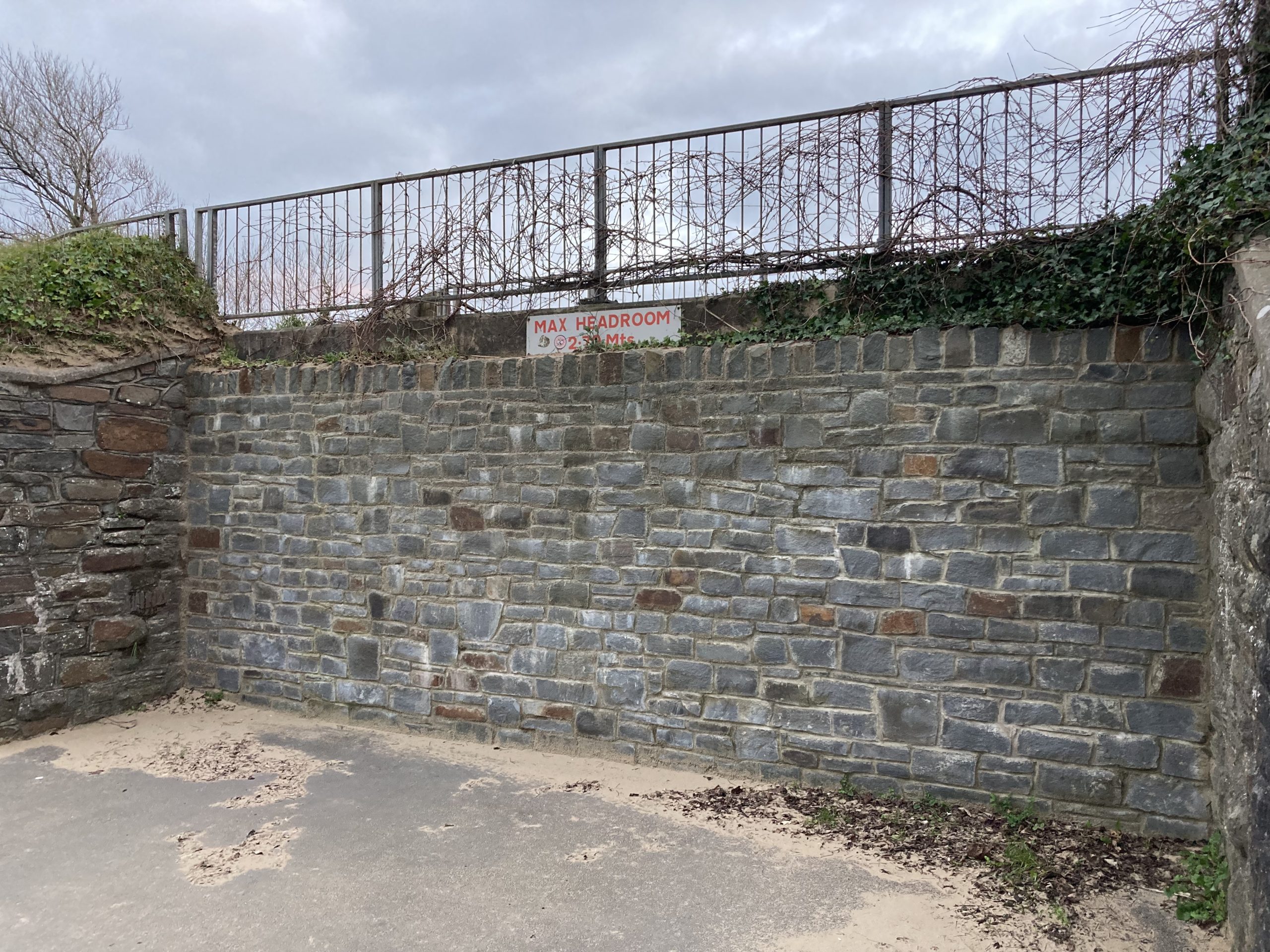
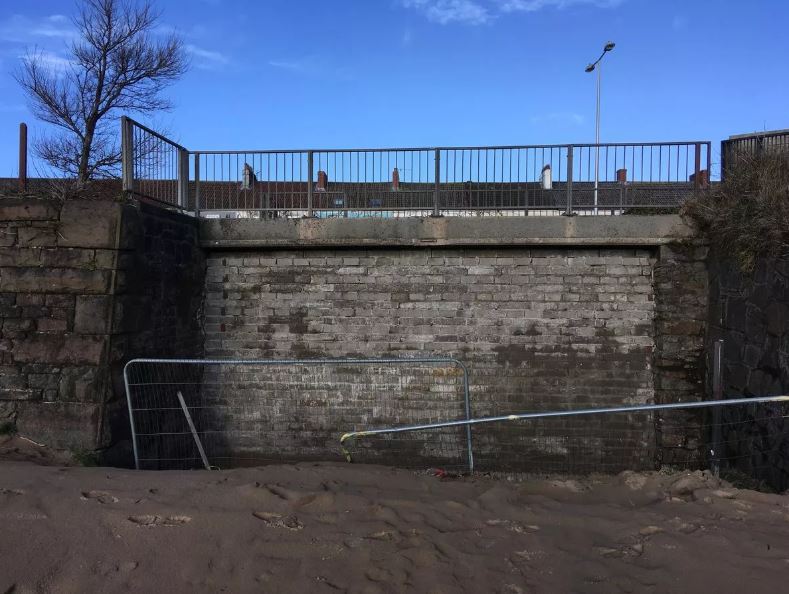
The blocked-off beach underpass west of the Civic Centre, Swansea (Pic: Richard Youle)
IT CAN be hard to picture the implications of climate change but walk along the promenade in Swansea and there are visible reminders that coastal flooding and sea level rise are a threat. Contractors are renewing and increasing the height of the sea wall in Mumbles in a £26m project designed with projected 2070 sea levels in mind while a low-lying beach underpass near the Civic Centre was permanently blocked off a couple of years ago.
Further west in Carmarthenshire an eye-opening council report this year said Bynea, near Llanelli, was likely to flood more often and more significantly within the next 30 years. The report said there was “little or no evidence both nationally and locally of forward-planning for the impacts of climate change and sea level rise” and warned: “As such the communication of these risks and engagement with our coastal communities at greatest risk from climate change and sea level rise is almost non-existent.”
Sea levels have been rising – by 20cm between 1901 and 2018, according to the Met Office – and the rate of increase is accelerating. Projections of future sea level rise vary but it’s something that coastal communities everywhere must adapt to.

What happens though if the link between rising greenhouse gas emissions, temperatures, and sea levels – caused by melting ice and thermal expansion of seawater – gets abruptly out of kilter? If a relatively small change had a huge and unexpected consequence? In a report for the UK Government about the economics of climate change 17 years ago economist Nicholas Stern – now Lord Stern – warned of “non-linear” changes in the system. He wrote: “Warming will increase the chance of triggering abrupt and large-scale changes.”
He went on: “The chaotic nature of the climate system means that relatively small amounts of warming can become amplified, leading to major shifts as the system adjusts to the new conditions.” There was a risk of crossing a threshold, he wrote, beyond which melting or even collapse of major ice sheets would be irreversible, committing the world to several metres of sea level rise long term. Crop yields, he said citing a study, could reduce by up to 70% by 2100 without adaptation. He added that abrupt changes such as these were hard to predict.
Climate tipping points have been explored more recently by the Global Systems Institute, based at Exeter University, which has backed calls for a special report on the subject by the United Nations Intergovernmental Panel on Climate Change (IPCC). The institute’s report published in December 2023 also showed how positive tipping points – such as the world’s rapidly-accelerating deployment of solar and wind power along with behavioural change – could help meet the urgency of the challenge.
The report, called Global Tipping Points, identified five major systems that were already at risk of crossing tipping points at the present level of global warming of around 1.2C. These were the Greenland and West Antarctic ice sheets, warm-water coral reefs, parts of permafrost regions facing abrupt warming, and a circulating North Atlantic current south of Greenland called the subpolar gyre, which among other things transports large amounts of atmospheric carbon into the deep ocean.
The report identified more than 20 other systems that have tipping points such as Amazon forest dieback and the collapse of some fisheries, which get closer with every fraction of a degree of warming. “In many cases the consequences of passing one tipping point make other connected tipping systems more or less likely to tip as a result,” it said. “If passing one tipping point makes another tipping point more likely then tipping points could cascade with a chain of tipping points triggering each other.”
It said tipping points showed that the overall threat posed by the climate and ecological problem was far more severe than was commonly understood and added: “The world is largely flying blind into this vast threat.” The report, which ran to 478 pages and had contributions from 200 researchers, acknowledged the complexity of the subject. “The associated uncertainty may sometimes seem huge and we must deal openly with it,” it said. Tipping point cascades, it added, were currently highly uncertain. But the report said it would be wrong to state that all tipping points were “inherently unpredictable”.
The authors urged a rapid cut in greenhouse gas emissions and recommended that countries assessed their own exposure to tipping points, put in place measures to help prevent them occurring, and planned for managing potential impacts. They also recommended strategies and interventions – technological innovation, financial investment, and political and social action – to encourage positive tipping points. Clearly humans possess remarkable ingenuity and many people want to do the right thing and not leave the environment worse for their children and grandchildren.
“Positive tipping points don’t just happen, they need to be actively enabled,” said the report. In the early 2000s the UK Government provided grants for offshore wind energy demonstration projects and then gave investors confidence by offering a guaranteed price for the electricity produced by offshore wind farms. The industry has expanded massively. There could be losers as well as winners though, said the report, and “the required scale and speed of change will only be possible with sufficient public consent”. Fairness, said the report, was crucial. Given that the richest 10% of the world’s population accounted for nearly half of all greenhouse gas emissions, it said, “luxury-focused” carbon taxes were necessary.
Dr Chris Boulton, a co-author of Global Tipping Points, specialises in the study of early warning signals. Asked if we’d actually know if we’d crossed a climate tipping point he said this would vary. The collapse of a monsoon system, he said, could happen extremely quickly whereas we might not observe a strong dieback of the Amazon rainforest for decades despite a line being crossed.
Dr Boulton, of the Global Systems Institute at Exeter University, said it was possible that new climate tipping points might emerge although scientists had a reasonably strong understanding of the climate system by now.
He added: “Each tipping point system behaves in its own way and we often link them to changes in global mean temperature. We believe systems such as the Greenland or West Antarctic ice sheets are likely to tip with around 1.5C of warming but boreal forests (found across Russia, Canada, and Alaska) with much more warming. For other systems it’s clearly not just the global mean temperature that plays a role. The Amazon rainforest is highly affected by deforestation, which destabilises the atmospherics that cause rainfall much deeper into the forest.”
Dr Boulton said he believed political leaders were starting to be sufficiently briefed on climate tipping points and that the report he helped draw up was partly driven by a desire to fill that gap. Asked if he felt we were still largely “flying blind” into this threat, as the report warned, he said: “Not as blind as we were. I think people are starting to take notice.”
Was there a climate tipping point which gave him particular cause for concern? The Amazon rainforest, he said, given it was “vitally important” in combating climate change and that it has faced an additional human pressure – deforestation – as well as rising global temperatures. Asked what technological, economic, or social tipping points he was most encouraged by he said the uptake of electric vehicles (EVs). He said: “I know there are concerns regarding mining for materials for them but globally emissions from EVs are reduced compared to petrol vehicles.”
He added: “If it can be called one the want and need for people to take action on climate could also be called a social tipping point.” He said he felt all the climate rallies which have started happening wouldn’t have had the same traction a decade or so ago. Dr Boulton said as a scientist it was exciting when he identified a really strong result in a climate dataset but added: “Then you think: ‘What does that mean for the world?’ It’s quite conflicting sometimes.”
The report he helped write also warned of “pulse-like migration” and even “mass displacement” from severely affected countries if climate tipping points were crossed. What we considered to be “business as usual” would not exist. Social systems “likely characterised by greater authoritarianism, hostility, discord and alienation” could be ushered in. On the other hand, well-planned and funded interventions could bring about positive tipping point “cascades”.
In a separate report published in the magazine New Scientist this month, scientists said an area of sea ice nearly 6.5 times the size of the UK has disappeared from Antarctica in the past two years. It’s the equivalent of the ring of sea ice which forms every winter around the Antarctic continent shrinking by an by an average of 75 miles.
Swansea University professor Mary Gagen, who studies forests and the records of past global change contained in ancient trees, described climate tipping points as “fast, disruptive, and one-directional”. She said they were also extremely complex. A warming Atlantic, for example, might potentially drive more rainfall towards the Amazon, providing some benefit.
Prof Gagen was the lead author of a technical briefing for the World Wide Fund for Nature in 2022 which found that just over 34% of the entire Amazon had reached at least one of three theoretical tipping point thresholds: decreasing annual rainfall, increasing dry season length, and percentage of forest loss. Areas of the Amazon are now emitting more carbon, for example through the clearing and burning of trees, than they absorb. The briefing described a tipping point as a “critical threshold” above which a further change could alter an entire system which would be irreversible on human timescales. It added that it was possible to stress the Amazon to a state of permanent degradation.
Prof Gagen, who wasn’t a contributor to the Global Systems Institute report, said tipping points relied on modelling. Real-world evidence of crossing them, she said, would provide proof but was equally “the one thing we don’t want to happen”. She said: “We need to take a precautionary approach. Less warming means less tipping point risk. The impact of tipping points [being crossed] would be so serious that we need to act anyway. The single biggest risk is breaching 1.5C.”


Review: Music, tribute and reflection at Ffwrnes Theatre, with Carmarthen Symphonic Wind Band, Meibion Elli and young local performers
Review by Robert Lloyd
It would be hard to think of a better way to end a week of Remembrance than this special festival staged at Llanelli’s Ffwrnes Theatre.
It was an evening which provided just the right measures of tribute, respect, dignity and emotion.
And it was fitting that it ended with a special presentation to Royal British Legion Llanelli branch president Ray Batsford, a veteran who has provided years of sterling service to the community.
The Llanelli branch of the RBL is in fine shape, on the evidence of a Poppy Appeal estimated to have raised £24,000 locally this year.
The branch’s organisation of the Festival of Remembrance was magnificent from start to finish, helped by the Rev Eldon Phillips as compère and Cerith Owens as artistic director.
The highlight of the evening was an impressive Drumhead Service of Remembrance, conducted by RBL Llanelli branch chaplain the Rev Delyth Richards. The silence was impeccably observed and there were many tears shed among the audience.
The festival was blessed with musical support from the Carmarthen Symphonic Wind Band, performing under the baton of their new musical director, Rhodri Rutherford.
On a day when Welsh pride and passion were well to the fore, it was appropriate that Meibion Elli should bring their own brand of powerful and emotional male voice singing to the stage.
The evening began with the muster of banners, with the symphonic band providing the musical background of Great Little Army and Arromanches.
Meibion Elli’s first set, under musical director D Eifion Thomas, included the powerhouse Gwahoddiad, the Welsh version of Anthem from Chess and the Elvis Presley classic Precious Lord. The featured soloist was award-winning baritone John ‘Pontyberem’ Thomas.
The first soloist of the evening was Scott Holmes, a member of the Llanelli-based Loud Applause Rising Stars team. He was totally tuned in to the emotion of the evening with performances of Bui Doi (Dust of Life) from Miss Saigon and the classic Empty Chairs at Empty Tables from Les Misérables.
The youngsters of Ysgol Bryngwyn Comprehensive School, drawn from Years 7 to 11, were a delight, with a set which included When I Grow Up from Matilda and John Lennon’s classic Imagine.
The Carmarthen Symphonic Wind Band took centre stage with The Great Escape, Tell My Father, featuring Rhodri Rutherford, Dafydd y Garreg Wen and Jitterbug.
Soloist Betsan Daniel, also a member of Loud Applause Rising Stars, was a late replacement for the unwell Lauren Elizabeth Williams, but she displayed wonderful composure with A Nightingale Sang in Berkeley Square and Adre, the celebrated Caryl Parry Jones tear-jerker.
The wind band stirred the soul with Elgar’s Nimrod, before Meibion Elli concluded with You’ll Never Walk Alone, Ashokan Farewell and The Mansions of the Lord.
David Blewitt, pipe major of the City of Swansea Pipe Band, provided bagpipe accompaniment to the Service of Remembrance, which included the hymns Efengyl Tangnefedd and O God, Our Help in Ages Past.
There were prayers before the Exhortation, the Last Post, the Silence and the Kohima Epitaph. The festival also featured an emotional poetry reading by Welsh Guards veteran Chris Beynon and a short speech by Geraint Davies reflecting on the Iraq War.

Find out more about the Royal British Legion’s work locally on the Friends of The Royal British Legion – Llanelli Branch Facebook page.
Main image: The Rev Delyth Richards conducts the Drumhead Service of Remembrance at Ffwrnes Theatre, Llanelli (Image supplied).

Jay Francis Cockburn was sentenced to 12 weeks after admitting a breach involving missed probation and treatment appointments
A DRUG-DRIVER has been jailed for 12 weeks after repeatedly failing to comply with a community order imposed for offences in Ceredigion.
Jay Francis Cockburn, 35, of no fixed abode, admitted the breach at a hearing on Monday (November 9).
He was at Haverfordwest courthouse but appeared before a Llanelli magistrates’ bench, according to the court register.
The proceedings concerned a community order made at Aberystwyth Magistrates’ Court on July 1. Cockburn had been convicted in October 2025 of two drug-driving offences arising from the same incident at Llanafan on July 3 that year.
He had driven a Ford Mondeo with controlled substances in his blood above the specified limits.
The breach proceedings listed failures to comply with a planned home visit on August 4, a drug rehabilitation appointment on October 2 and supervision appointments on October 6, October 20 and November 3.
Magistrates revoked the community order and re-sentenced Cockburn for the original offences, imposing two 12-week prison terms to run at the same time.
In their recorded reasons, the bench described his failure to comply as wilful and persistent and said the driving could have had devastating consequences.
The court concluded that his failure to comply with previous community orders for the offence demonstrated an unwillingness to engage with probation, and that the prison sentence could not be suspended.
No order was made for costs.

Carmarthenshire Council’s HQ at County Hall (Pic: Richard Youle)
Councillors seek an urgent plan with Hywel Dda to provide nursing support for pupils with complex medical needs
PERMANENT nursing should be available at all specialist additional learning needs (ALN) facilities in Carmarthenshire, according to councillors.
They backed a motion brought by Labour councillors Martyn Palfreman and Edward Skinner which said pupils in such venues often needed complex medical interventions during the school day.
“These include tube feeding, catheterisation, tracheotomy care, monitoring and responding to seizures, and the timely administration of prescribed rescue medication,” it said.
“Despite the dedication of educational staff in such establishments, who provide outstanding care for pupils and have undertaken training to meet individual healthcare needs, it should be recognised that they are not medically qualified.
“As such, they should not be expected to be responsible for recognising clinical deterioration, assessing complex medical symptoms or responding to potentially life-threatening medical emergencies that arise during school time.”
There was particular focus on Ysgol Heol Goffa, Llanelli, where many pupils have very complex needs and where, according to the motion, the head teacher has sought permanent onsite nursing provision for more than five years.
“Parents have expressed serious and continuing anxiety about the safety of their children in the absence of a registered nurse permanently based on site,” it said.
Discussions have taken place between the council and Hywel Dda University Health Board and the motion called for an urgent meeting between them and other parties in a bid to agree a “funded and time-bound plan”.
The motion also said a jointly-commissioned clinical risk assessment for every pupil with complex or life-limiting medical needs should be done immediately.
Speaking at a meeting of full council Cllr Palfreman said providing the right support could in some cases “can be a matter of life or death”. He and others praised the work of teachers and teaching assistants.
Cllr Crish Davies said: “Every parent deserves peace of mind that comes from knowing that their child is in safe hands.” Some of them, she said, lived with worries “we can barely imagine”.
Cllr Deryk Cundy said five children at a special school had palliative care, seven had feeding valves, three had shunts, and 22 had epilepsy. He added that many children could not articulate their concerns.
Cllr Gareth John said he supported the motion with two reservations – that it was logical for the outcome of discussions between the council and the health board to reach an outcome before cabinet discussed the motion, should it be approved, and an acknowledgement the council could lobby but couldn’t create a health workforce “that may not even exist”.
Cllr Jane Tremlett, cabinet member for integrated health and children and adult services, said: “Every child with complex needs should be able to attend school safely, with dignity and with confidence that the appropriate support is available if they need it.”
She said school staff shouldn’t be expected to be healthcare professionals. “We need absolutely clarity about where professional responsibility sits and how that provision is commissioned and funded,” she said.
She said different schools might need different models of provision, and added: “What matters is it’s safe, clinically approved and sustainable.”
Cllr Glynog Davies, cabinet member for education, called on the health board “to take up their responsibility seriously” and said the Welsh Government should provide clarity on what they expected councils to provide.
Responding to the motion, Sharon Daniel, director of nursing, quality and patient experience at Hywel Dda University Health Board, said: “The health and wellbeing of all children and young people is fundamental to their ability to learn, thrive and reach their potential, and is a priority for us.
“We support the children and young people at Ysgol Heol Goffa with a specialist/community children nursing service to meet their universal health needs, and through the provision of training for staff at the school.
“We provide specialist support, ensuring each child and young person with healthcare needs can be cared for competently and confidently within the school environment. Through continued partnership working and a shared commitment to improvement, we will support ongoing actions to strengthen provision and ensure the best possible outcomes for the pupils and staff at Ysgol Heol Goffa.”
-

 Community1 day ago
Llanelli Festival of Remembrance brings week to an emotional close
-

 News1 week ago
Gateway Resort owner loses appeals over glamping pods and clubhouse extensions
-

 Education5 days ago
Carmarthenshire councillors call for permanent nursing at special schools
-

 Education3 weeks ago
BT Work Ready programme helps Llanelli pupils build skills for future careers
-

 Education2 weeks ago
Llanelli special school pupils welcome plans for larger school with outdoor space
-

 Business1 week ago
Fast Forward sets its sights on the next stage of growth
-

 News2 weeks ago
Consultation opens on plans for eight new stations and expanded rail services
-
 Business3 weeks ago
Two Wales projects named winners at RICS UK awards