
News
Swansea Council discusses huge challenges to reaching ‘net zero’

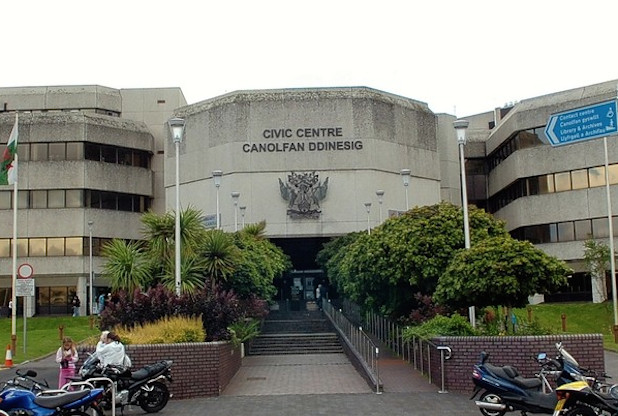
A DEBATE about the cost of six new bungalows at a council meeting in Swansea was part of a larger story about what it takes to re-engineer our homes, transport, industry and agriculture to slash greenhouse gas emissions.
It emerged that the properties built by the council in West Cross had low-carbon technology costing £51,000 each, taking the total construction cost to £283,000 per bungalow.
The council wants to build 1,000 energy-efficient rental homes over 10 years, and also expects to have to “decarbonise” its existing housing stock – an undertaking costing several hundred million pounds alone. The authority has wider “net zero” ambitions, and said it needed financial backing to turn them into reality.
The upfront sums are significant, but the medium and long-term benefits look attractive and the wider environmental case for action, say all kinds of experts, is unarguable.
Around 12 miles from the bungalows is Tata Steel’s Port Talbot plant, where £500 million of UK Government support is expected to be used in a £1.2 billion investment to reduce emissions by investing in electric arc furnace steel-making, replacing coal-powered blast furnaces. Significant job losses are feared though, jolting the received wisdom that the new green economy means more employment.
It is becoming clearer that net zero pledges may be fairly straightforward, but re-tooling an entire economy to achieve them isn’t.
In Llanybydder, Carmarthenshire, meat processor Dunbia will use a £1 million UK Government grant to help replace its red diesel-powered boiler with an air source heat pump powered by renewable electricity. A Dunbia spokeswoman said the new system would cost just over £3 million, reduce emissions, and that the company aimed to be net zero in terms of its operations by 2040.
Some people might ask why large companies can’t fund their own green transitions. In answer to this a Dunbia spokeswoman said in its case there was an additional cost because the current boiler was being decommissioned in advance of its planned end-of-use date. She added the company was eligible to apply for the relevant UK Government funding and was delighted to have been successful.
These are just snapshots of a vast endeavour which the UK is committed to achieving by 2050, and it is causing a political reckoning in some quarters.
Much of the UK’s notable emission reductions so far have occurred out of sight, thanks to drastic cuts in coal-burning and an expansion of renewable energy production. Introduce changes to boilers and cars, and the issue arrives on our driveways – if we’re lucky to have one – and into our homes.
Repeated warnings from economists about the costs of inaction make sense on a macro level, but arguably less so on a personal level if you can delay having to buy an expensive air source heat pump or electric car.
Warnings from scientists about the perils of not acting grow ever louder. In 2023, average global sea surface temperature records have been broken, the reduced coverage of Antarctic sea ice has spooked researchers, and wildfires in Canada have been in the news for months.
Thomas Rippeth, professor of physical oceanography at Bangor University, said the world’s oceans have absorbed around half of mankind’s greenhouse gas emissions. Crucially, they also absorb more than 90% of the excess heat caused by these emissions. Prof Rippeth said if temperatures kept rising, oceans would become less efficient at doing this.
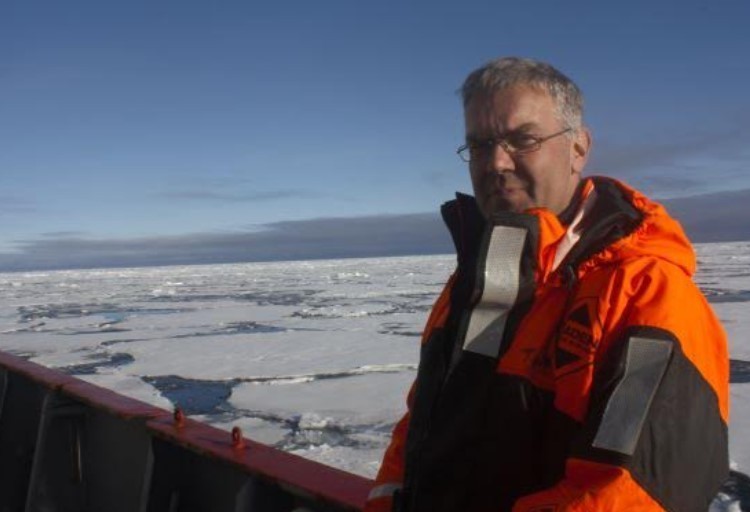
The average global sea surface temperature reached a new high in August. The significance of this is that while only a tiny fraction above the previous record, the oceans are normally at their warmest in March at the end of the Southern Hemisphere summer. Which makes you wonder if the record books will be written again in March next year.
Asked how warmer oceans affected their chemistry and the wildlife in it, Prof Rippeth explained the warmer sea water was the less oxygen and carbon dioxide it could hold. He added: “Also, in warmer water organisms’ metabolisms work more quickly and so they require more oxygen – in consequence marine heatwaves stress marine organisms.”
Polar physical oceanographer, Professor Yueng-Djern Lenn, said Antarctic sea ice formed from freezing seawater. Vast amounts of it form in the winter – in fact the difference in the summer-to-winter extent of this sea ice is around 17 million square kilometres, or roughly the size of Russia.
Prof Lenn, of Bangor University, explained that sea ice was different to the floating ice sheets which originate from the continent’s glaciers. However, she said sea ice and floating ice sheets bind together along the coast and slow down the discharge of glaciers into the sea. Any weakening of this slowing down effect has important implications because it is the glaciers discharging into the sea which contributes to rising sea levels.
Prof Lenn said the reduced extent of Antarctic sea ice has been record-breaking in both summer and winter this year – the winter reduction, she said, was around eight times of the size of the UK compared to normal pre-2010 levels. A warmer atmosphere and ocean could be the causes, she said, and scientists have found that the ocean around the Antarctic has warmed considerably since around 2015-16, and was continuing to stay warm.
Geography professor and wildfire expert Stefan Doerr, of Swansea University, said the extent of Canadian wildfires this year have been “enormous”, and that the weather patterns which deposited the smoke on populated areas of the US eastern seaboard were “highly unusual”.
It was a mixed picture elsewhere, he said, with Spain and Portugal having fewer wildfires than would be expected given the intense spells of heat the countries experienced. Prof Doerr said Greece had been badly hit, and that the catastrophic fires in Hawaii last month had been fanned by very strong winds in combination with a dry summer.
Prof Doerr said satellite records showed that the area of northern forests, such as those in Siberia and Canada, affected by wildfires has risen over the last 10 to 20 years, whereas savannah fires such as those in Africa were falling. Crucially, though, he said the actual area of savannah has decreased as more of it was converted for agriculture.
Prof Doerr added that the duration of the wildfire season was increasing, and that the destructive Canadian fires had started very early in 2023. Warmer temperatures dry out vegetation faster, creating fire conditions, unless accompanied by steady rain. “For every one degree (Centigrade) of temperature rise, you need 15% more rainfall to increase the soil moisture content to what it was,” said Prof Doerr.
Juggling a subject which can be overwhelming is the lot of politicians these days.
The Local Democracy Reporting Service asked Wales’s Deputy Minister for Climate Change, Lee Waters, if governments have been guilty of making grand announcements about reducing emissions while not explaining to people what it’s likely to mean for they way they heat their homes and travel.
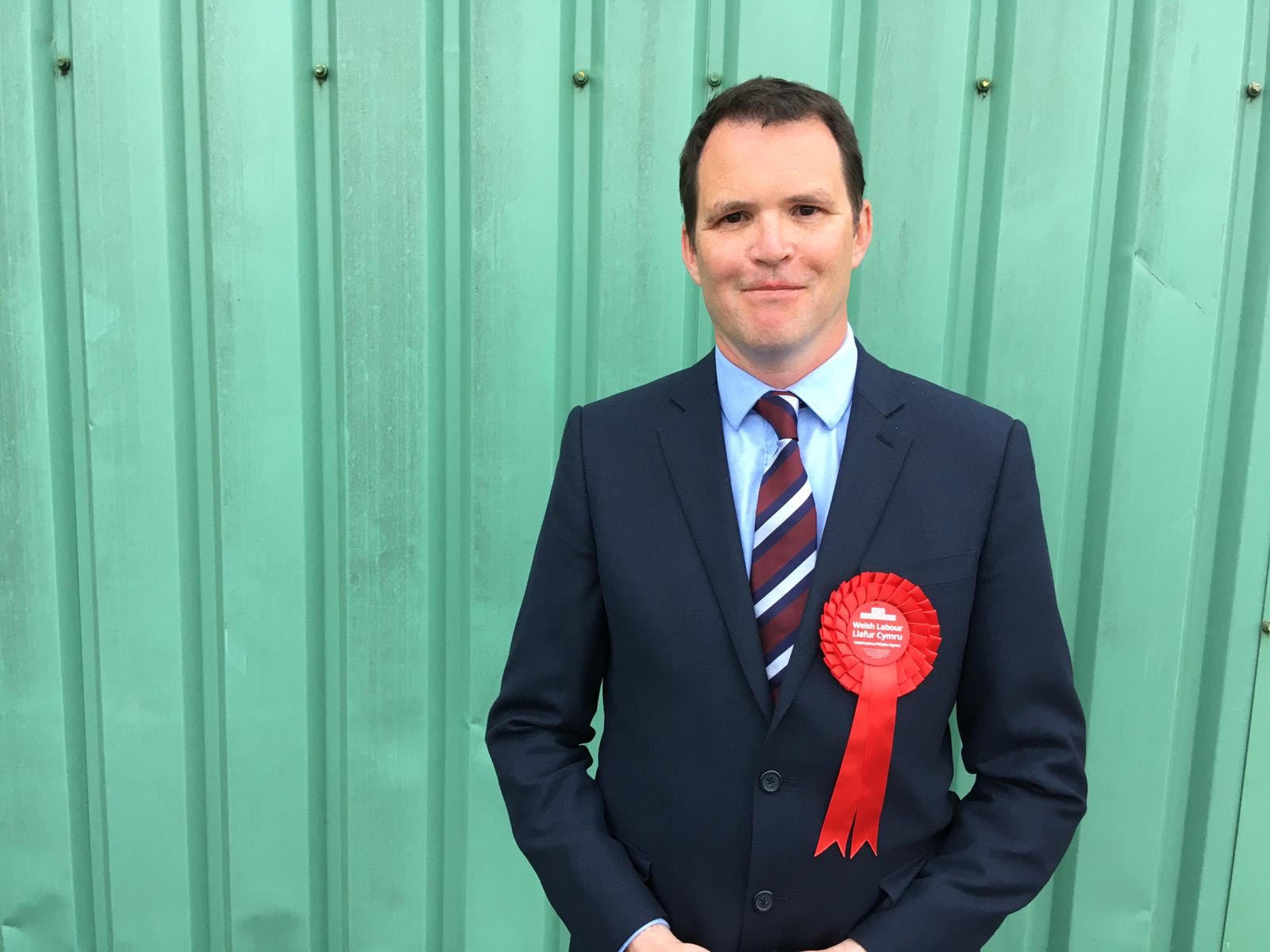
Mr Waters, speaking before Prime Minister Rishi Sunak’s net zero announcements this week, said human psychology was not suited to dealing with long-term threats. “This is hard,” he said. “The scale of the challenge to respond to the science is huge. During Covid we were able to make big changes because the threat was imminent. With the climate the threat feels further away, even though we are seeing deaths from climate-related events.
“In our minds it feels like a problem for the future – but the changes we need to make are now. This is what the science tells us. We are off course, the consequences are not academic, they are real world.
“We face sea level rises within my children’s lifetime which are going to engulf most Welsh coastal towns – one to two metres by the end of the century. This is going to have a massive economic impact, as well as a risk to life. I think as politicians we need to be courageous, but this can’t just be led by politicians. I can understand why politicians are nervous about getting too far ahead of public opinion.”
Mr Waters has expressed frustration that political parties agree on net zero but then fall into disagreement when specific changes in a short timeframe are put forward.
He said a recent Welsh Government review of tree-planting to contribute towards carbon reduction targets was criticised by the Welsh Conservatives, Plaid Cymru and farmers, while its roads review also came in for political flak.
“The normal rules of politics seem to apply here, even though we face a threat which is going to trash the economy,” he said. “We can’t treat this as a normal political issue.”
Mr Waters stressed though that he didn’t believe in “the counsel of despair”. He said: “I do feel pessimistic, but it’s not too late. We have a chance. It does not have to be like this. We can stop this if we act at scale, and now.”
The question of implementing net zero measures fairly is another huge subject. Mr Waters said interventions were needed, such as home insulation programmes and better bus services. “Public transport is an investment in the public good,” he said. In places like France and Switzerland, he said, passenger fares were much lower as the general taxpayer covered a high proportion of costs. Mr Waters said he and his cabinet colleagues wanted to introduce a standard £1 bus fare in Wales, but could not afford to.
Was the Welsh Government, which like the UK has a legally-binding target to reach net zero by 2050, looking elsewhere for a net zero blueprint? “No country has cracked it – this is a challenge for the whole world,” said Mr Waters. “We have the tools to do a lot of this. The thing that’s missing right across the piece is the lack of urgency and lack of scale.”
During our conversation Mr Waters brought up the new 20mph limit on most urban roads, which has generated significant public opposition. Although safety was the “primary lens”, he said, change was needed to encourage a switch to other, environmentally-friendly modes of transport.
Plaid Cymru deputy leader Delyth Jewell, who is the party’s spokeswoman on climate change, said governments had a responsibility to set emissions targets and “an absolute obligation” to encourage people to be part of the solution so that they felt listened to. “I don’t think governments get that right all the time,” she said.
“I do feel the vast majority of the public supports the need to act on climate change and to reach net zero. For the vast majority of young people, it’s the one thing that concerns them most.”
The South Wales East MS also said governments had to provide funding to help people go green. “People are frightened of change – it’s a really common trait,” she said. “And there are a lot of barriers. When it comes to charging infrastructure for electric cars, people need to feel confident they can make a full journey. I represent a lot of people who live on terraced streets, and it’s not possible for them to charge at the moment.”
Miss Jewell said she believed greater investment in renewable energy years ago would have resulted in lower household bills and less exposure to volatile gas markets, particular after Russia’s invasion of Ukraine in February 2022.
On the roads review and Plaid’s response to it, she said people needed to have transport alternatives, although she put the underlying funding problems at the door of Number 10 Downing Street.
Miss Jewell judged some of the environment-related measures brought in by the Labour Welsh Government as, in her words, very brave. “They are willing to make decisions which are not popular but are necessary,” she said.
She felt Mr Sunak’s environmental policy changes this week, including pushing back a ban on new petrol and diesel cars by five years to 2035, had undermined consistency and public confidence. “People will feel that maybe they don’t need to do this – it’s not that serious,” she said. “I think that’s what’s concerning.”
Mr Sunak said he was still committed to the 2050 net zero target, and that the subsidy for a new home heat pump would rise by 50% to £7,500. Politicians, he said, had not been honest about costs and trade-offs, and he described his approach as proportionate and pragmatic. Chris Stark, the chairman of the UK Committee on Climate Change, which advises the UK Government, said he believed Mr Sunak’s changes would make it harder for Westminster to hit legally binding climate goals.
Janet Finch-Saunders, Welsh Conservative Shadow Minister for Climate Change, said she felt it was essential that the Prime Minister had updated the UK Government’s net zero targets.
“People overall are willing to make sacrifices to protect the planet for future generations, but we cannot rush into net zero at the detriment of people’s personal finances,” she said. “If we continued on the previous path we risked losing the consent of the British people which would put our net zero responsibilities in jeopardy.”
She added: “The debate about climate change is stuck between two extremes: those who want to deny climate change or abandon net zero altogether because the costs are too high, and those who want to go further and faster with no regard to the cost to people’s lives or how much our country has already achieved compared to others.
“We need to change this debate and forge a credible path to reach net zero by 2050 that brings people with us and is properly transparent about the choices involved.”
The Aberconwy MS added: “The UK Government’s £500 million investment into Tata steel announced last week proves that the cost of net zero is high, but that it is a price worth paying.”
Asked to comment on Mr Water’s complaint that political consensus fell apart in Wales when specific measures were proposed or introduced, she said: “I don’t believe what the Deputy Minister says is entirely accurate, people and politicians object to measures that are not properly explained to the public. People want politicians to walk through the changes with them, which wasn’t the case with the 20mph rollout.”
Commenting on Welsh Labour’s roads review, Ms Finch-Saunders said it didn’t in her view take into account the ongoing switch to electric cars. “We need forward thinking, future-proofed policies that benefit the people of Wales, encouraging them to support net zero and come along this essential journey with us,” she said.


Review: Music, tribute and reflection at Ffwrnes Theatre, with Carmarthen Symphonic Wind Band, Meibion Elli and young local performers
Review by Robert Lloyd
It would be hard to think of a better way to end a week of Remembrance than this special festival staged at Llanelli’s Ffwrnes Theatre.
It was an evening which provided just the right measures of tribute, respect, dignity and emotion.
And it was fitting that it ended with a special presentation to Royal British Legion Llanelli branch president Ray Batsford, a veteran who has provided years of sterling service to the community.
The Llanelli branch of the RBL is in fine shape, on the evidence of a Poppy Appeal estimated to have raised £24,000 locally this year.
The branch’s organisation of the Festival of Remembrance was magnificent from start to finish, helped by the Rev Eldon Phillips as compère and Cerith Owens as artistic director.
The highlight of the evening was an impressive Drumhead Service of Remembrance, conducted by RBL Llanelli branch chaplain the Rev Delyth Richards. The silence was impeccably observed and there were many tears shed among the audience.
The festival was blessed with musical support from the Carmarthen Symphonic Wind Band, performing under the baton of their new musical director, Rhodri Rutherford.
On a day when Welsh pride and passion were well to the fore, it was appropriate that Meibion Elli should bring their own brand of powerful and emotional male voice singing to the stage.
The evening began with the muster of banners, with the symphonic band providing the musical background of Great Little Army and Arromanches.
Meibion Elli’s first set, under musical director D Eifion Thomas, included the powerhouse Gwahoddiad, the Welsh version of Anthem from Chess and the Elvis Presley classic Precious Lord. The featured soloist was award-winning baritone John ‘Pontyberem’ Thomas.
The first soloist of the evening was Scott Holmes, a member of the Llanelli-based Loud Applause Rising Stars team. He was totally tuned in to the emotion of the evening with performances of Bui Doi (Dust of Life) from Miss Saigon and the classic Empty Chairs at Empty Tables from Les Misérables.
The youngsters of Ysgol Bryngwyn Comprehensive School, drawn from Years 7 to 11, were a delight, with a set which included When I Grow Up from Matilda and John Lennon’s classic Imagine.
The Carmarthen Symphonic Wind Band took centre stage with The Great Escape, Tell My Father, featuring Rhodri Rutherford, Dafydd y Garreg Wen and Jitterbug.
Soloist Betsan Daniel, also a member of Loud Applause Rising Stars, was a late replacement for the unwell Lauren Elizabeth Williams, but she displayed wonderful composure with A Nightingale Sang in Berkeley Square and Adre, the celebrated Caryl Parry Jones tear-jerker.
The wind band stirred the soul with Elgar’s Nimrod, before Meibion Elli concluded with You’ll Never Walk Alone, Ashokan Farewell and The Mansions of the Lord.
David Blewitt, pipe major of the City of Swansea Pipe Band, provided bagpipe accompaniment to the Service of Remembrance, which included the hymns Efengyl Tangnefedd and O God, Our Help in Ages Past.
There were prayers before the Exhortation, the Last Post, the Silence and the Kohima Epitaph. The festival also featured an emotional poetry reading by Welsh Guards veteran Chris Beynon and a short speech by Geraint Davies reflecting on the Iraq War.

Find out more about the Royal British Legion’s work locally on the Friends of The Royal British Legion – Llanelli Branch Facebook page.
Main image: The Rev Delyth Richards conducts the Drumhead Service of Remembrance at Ffwrnes Theatre, Llanelli (Image supplied).
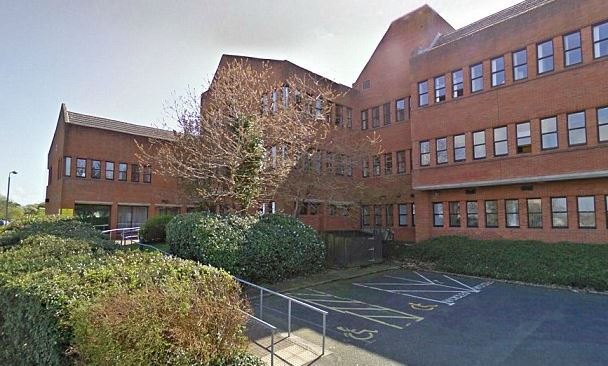
Jay Francis Cockburn was sentenced to 12 weeks after admitting a breach involving missed probation and treatment appointments
A DRUG-DRIVER has been jailed for 12 weeks after repeatedly failing to comply with a community order imposed for offences in Ceredigion.
Jay Francis Cockburn, 35, of no fixed abode, admitted the breach at a hearing on Monday (November 9).
He was at Haverfordwest courthouse but appeared before a Llanelli magistrates’ bench, according to the court register.
The proceedings concerned a community order made at Aberystwyth Magistrates’ Court on July 1. Cockburn had been convicted in October 2025 of two drug-driving offences arising from the same incident at Llanafan on July 3 that year.
He had driven a Ford Mondeo with controlled substances in his blood above the specified limits.
The breach proceedings listed failures to comply with a planned home visit on August 4, a drug rehabilitation appointment on October 2 and supervision appointments on October 6, October 20 and November 3.
Magistrates revoked the community order and re-sentenced Cockburn for the original offences, imposing two 12-week prison terms to run at the same time.
In their recorded reasons, the bench described his failure to comply as wilful and persistent and said the driving could have had devastating consequences.
The court concluded that his failure to comply with previous community orders for the offence demonstrated an unwillingness to engage with probation, and that the prison sentence could not be suspended.
No order was made for costs.

Carmarthenshire Council’s HQ at County Hall (Pic: Richard Youle)
Councillors seek an urgent plan with Hywel Dda to provide nursing support for pupils with complex medical needs
PERMANENT nursing should be available at all specialist additional learning needs (ALN) facilities in Carmarthenshire, according to councillors.
They backed a motion brought by Labour councillors Martyn Palfreman and Edward Skinner which said pupils in such venues often needed complex medical interventions during the school day.
“These include tube feeding, catheterisation, tracheotomy care, monitoring and responding to seizures, and the timely administration of prescribed rescue medication,” it said.
“Despite the dedication of educational staff in such establishments, who provide outstanding care for pupils and have undertaken training to meet individual healthcare needs, it should be recognised that they are not medically qualified.
“As such, they should not be expected to be responsible for recognising clinical deterioration, assessing complex medical symptoms or responding to potentially life-threatening medical emergencies that arise during school time.”
There was particular focus on Ysgol Heol Goffa, Llanelli, where many pupils have very complex needs and where, according to the motion, the head teacher has sought permanent onsite nursing provision for more than five years.
“Parents have expressed serious and continuing anxiety about the safety of their children in the absence of a registered nurse permanently based on site,” it said.
Discussions have taken place between the council and Hywel Dda University Health Board and the motion called for an urgent meeting between them and other parties in a bid to agree a “funded and time-bound plan”.
The motion also said a jointly-commissioned clinical risk assessment for every pupil with complex or life-limiting medical needs should be done immediately.
Speaking at a meeting of full council Cllr Palfreman said providing the right support could in some cases “can be a matter of life or death”. He and others praised the work of teachers and teaching assistants.
Cllr Crish Davies said: “Every parent deserves peace of mind that comes from knowing that their child is in safe hands.” Some of them, she said, lived with worries “we can barely imagine”.
Cllr Deryk Cundy said five children at a special school had palliative care, seven had feeding valves, three had shunts, and 22 had epilepsy. He added that many children could not articulate their concerns.
Cllr Gareth John said he supported the motion with two reservations – that it was logical for the outcome of discussions between the council and the health board to reach an outcome before cabinet discussed the motion, should it be approved, and an acknowledgement the council could lobby but couldn’t create a health workforce “that may not even exist”.
Cllr Jane Tremlett, cabinet member for integrated health and children and adult services, said: “Every child with complex needs should be able to attend school safely, with dignity and with confidence that the appropriate support is available if they need it.”
She said school staff shouldn’t be expected to be healthcare professionals. “We need absolutely clarity about where professional responsibility sits and how that provision is commissioned and funded,” she said.
She said different schools might need different models of provision, and added: “What matters is it’s safe, clinically approved and sustainable.”
Cllr Glynog Davies, cabinet member for education, called on the health board “to take up their responsibility seriously” and said the Welsh Government should provide clarity on what they expected councils to provide.
Responding to the motion, Sharon Daniel, director of nursing, quality and patient experience at Hywel Dda University Health Board, said: “The health and wellbeing of all children and young people is fundamental to their ability to learn, thrive and reach their potential, and is a priority for us.
“We support the children and young people at Ysgol Heol Goffa with a specialist/community children nursing service to meet their universal health needs, and through the provision of training for staff at the school.
“We provide specialist support, ensuring each child and young person with healthcare needs can be cared for competently and confidently within the school environment. Through continued partnership working and a shared commitment to improvement, we will support ongoing actions to strengthen provision and ensure the best possible outcomes for the pupils and staff at Ysgol Heol Goffa.”
-

 Community1 day ago
Llanelli Festival of Remembrance brings week to an emotional close
-

 News1 week ago
Gateway Resort owner loses appeals over glamping pods and clubhouse extensions
-

 Education4 days ago
Carmarthenshire councillors call for permanent nursing at special schools
-

 Education3 weeks ago
BT Work Ready programme helps Llanelli pupils build skills for future careers
-

 Education1 week ago
Llanelli special school pupils welcome plans for larger school with outdoor space
-

 Business1 week ago
Fast Forward sets its sights on the next stage of growth
-

 News2 weeks ago
Consultation opens on plans for eight new stations and expanded rail services
-

 News12 months ago
Llanelli Town AFC women’s team secures new sponsor