
News
How Wales has explored the universe


BELIEVE it or not, the history of space discoveries in Wales goes way, way back to 1607, and a man called Sir William Lower.
Born and bred in Cornwall, Lower moved to Trefenty in Carmarthenshire after marrying Penelope Perrot.
In 1607, he observed Halley’s Comet with his naked eye and used a cross-staff to measure its position in relation to the stars. He shared his findings with other astronomers of the period, including Thomas Harriot, with whom he became a close friend.
Lower’s observations were greatly improved by the invention of the telescope in the Netherlands in 1608.
Within a year, British astronomers such as Harriot were making telescopes for themselves and sending them to other observers such as Lower.
Using his telescope, Lower became interested in studying the Moon. In 1610 he observed its irregular surface, likening it to a tart that his cook had made – ‘full of bright and dark stuff’.
This discovery was not published by Lower and the famous Italian astronomer Galileo Galilei was credited with the finding, leaving the Welsh links out of most history books.
Jumping ahead to 1851, John Dillwyn Llewellyn, who was born in Swansea in 1810, built an built an observatory in the grounds of his estate in Penllergare. The observatory was a birthday present for his daughter, Thereza, who shared his interest in the night sky.
Thereza assisted her father in his experiments and in 1857 they produced one of the earliest photographs of the Moon. Their efforts led to the site becoming a popular place for stargazing among local astronomers. The observatory housed a 4¾-inch aperture refracting telescope on an equatorial mount.
A restoration project is currently taking place at Penllergaer today by the Penllergare Trust. Guided by the unique archive of John Dillwyn Llewelyn’s mid-nineteenth century photography, the upper lake will be de-silted, and steps, terraces, waterfalls and cascades will be repaired and restored to reinstate the picturesque and romantic design.
The stone arched Llewelyn Bridge has now been completed; perhaps the only bridge of its type to be built in Britain in decades. The descendants of John Dillwyn Llewelyn are selling the estate piecemeal for housing developments.
Around the same time that Llewellyn was photographing the moon, Arthur Mee was moving to Llanelli from Scotland, before settling in Cardiff in 1892 as a journalist for the Western Mail.
Having had an interest in astronomy from childhood, Mee purchased a telescope at the age of seventeen and made detailed drawings of the Moon and Mars.
Furthermore, he established the The Astronomical Society of Wales in 1895. The Society organised regular lectures on astronomical subjects and published a journal under the editorship of Mee.
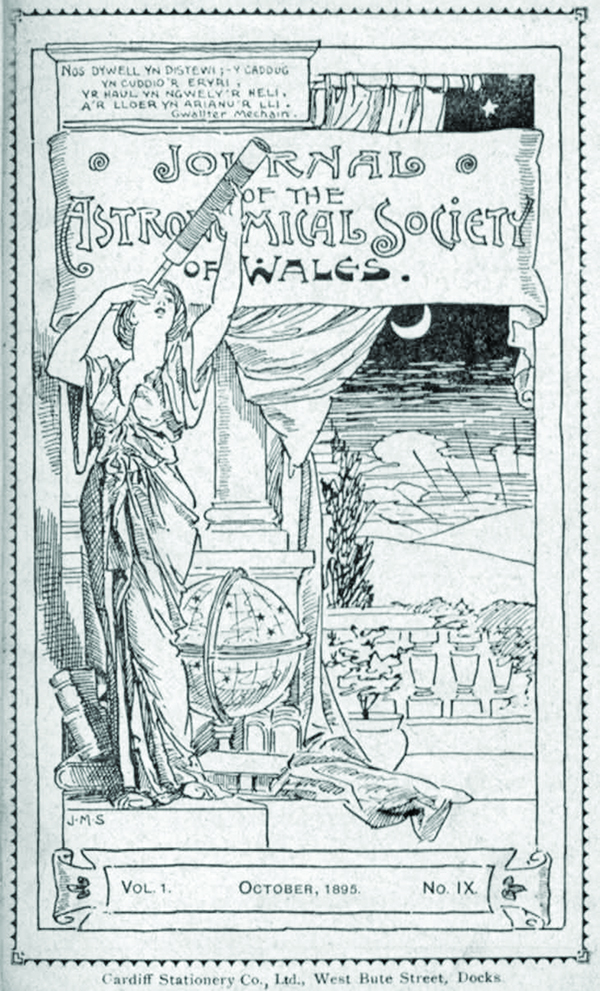
At its peak, membership of the society numbered 200, although it disbanded with the outbreak of the First World War in 1918. Many societies throughout Wales exist in the current times, however there is no centralised society for the entirety of Wales.
A Welshman also assisted NASA with the historic moon landing in the 1960s.
Hugh Percy Wilkins, born in Carmarthen in 1896, also had a lifelong love of astronomy and produced astronomical drawings as a teen.
After the First World War, he moved to Llanelli where he began to study the Moon’s surface in greater detail.
He completed his first Moon map in 1924 and subsequently published a number of larger and more detailed maps over the next ten years.
In 1938, Wilkins began work on a much larger map. This map was finished in 1946 and is his most famous work. It was over 7.6 metres in diameter and revealed hidden regions of the Moon and previously unknown features.
The map was subsequently used by NASA to decide where to land during the Apollo missions of the 1960s. Unfortunately, Wilkins did not live to see this, but a crater on the Moon is named in honour of his contribution to lunar observation, so a bit of Welsh history sits out in space forever.
A Welshman was also responsible for the rockets that NASA used to get to space in the first place – William Grove.
William Grove was born in Swansea in 1811. A lawyer by profession, Grove was also a keen amateur scientist. He was closely involved with the formation of the Royal Institution of South Wales in 1835.
In 1842 he invented the hydrogen fuel cell, which produced electricity. This was achieved by placing electrodes in sulphuric acid and separately in hydrogen and oxygen to produce an electrical current.
By linking several cells together a higher voltage could be achieved. A hundred years later, Grove’s invention provided the basis for the fuel cells used by NASA for the Gemini Earth orbit missions and the Apollo Moon landings. More recently, this technology has been used to power the Space Shuttle and satellites.
In 2015, Swansea City Council unveiled a Blue Plaque close to his former home in Grove Place to honour his achievements. A crater on the Moon is also named in his memory.
That’s not all, however, as Welsh scientists were also responsible for helping build the Beagle 2, which was a British Space probe that was launched in 2003. Its purpose was to search for signs of life on Mars, past or present.
Scientists from Aberystwyth University were responsible for developing Beagle’s robotic arm. This arm was designed to collect samples of soil from the planet. It would then return them to the robot’s on-board laboratory to search for signs of life.
The University also developed a computer simulation of the surface of Mars to help its movement.
The robot was due to land on Mars on Christmas Day 2003, though no message was received to confirm that it had landed safely and it was assumed lost.
In 2015, however, detailed images developed by scientists at Aberystwyth University showed that Beagle had successfully landed on Mars but had failed to deploy properly.
Wales also is playing a role in preventing a destruction-level event from occuring by monitoring meteoroids, asteroids and comets.
Based in Knighton, Powys, Spaceguard UK is the only organisation in the UK dedicated to addressing the hazard of Near Earth Objects (NEOs).
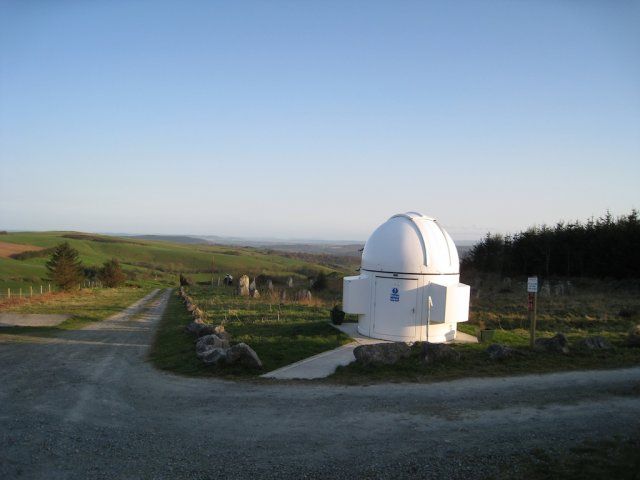
Acceptance of the threat posed by NEOs has risen in recent years following the explosion of a meteorite over Chelyabinsk, Russia, in 2013.
The work of organisations such as Spaceguard UK is crucial for assessing potential risks and for conducting research into how threatening impacts could be avoided.
Although not quite as important as saving the Earth, the International Space School Education Trust (ISSET) was founded in 1998 by Chris Barber in the Vale of Glamorgan.
ISSET uses Space exploration to inspire young people to choose careers and education in science, technology, engineering and mathematics. ISSET’s flagship competition, ‘Mission Discovery’ gives students the chance to work alongside NASA astronauts, designing an experiment that could be carried out in Space.
The winning experiment is launched to the International Space Station. There, the astronauts carry out the experiment and feed the results back to Mission Control in Houston.
In 2014, the first winning experiments began their journey into Space, with two groups of students from Wales being chosen to have their experiments tested on the mission.
One experiment looked at the effect of weightlessness and another on the development of Alzheimer’s disease. By 2017 ISSET will have launched more experiments into space than any other UK organisation with a majority of them stemming from Welsh pupils.
So, with such a successful history with space, where is next for Wales?
In July 2015, the Welsh Space Strategy was launched. This document outlines the role that Wales hopes to play in future Space exploration and the contribution it will make to the growth of the UK Space sector.
The areas identified for growth in Wales include unmanned aerial systems, rocket propulsion, satellite manufacturing and Earth observation. Developing these areas will improve the technology we rely upon for telecommunications, weather reporting, environmental analysis and national security.
A large number of companies and universities, as well as Aerospace Wales Forum and the Welsh Government have committed themselves to working together to ensure that Wales promotes its potential internationally and continues to attract new investment.
By 2030, it is hoped that Wales will generate 5% of the UK Space industry’s turnover – a £2bn opportunity per annum.
Scientists from Glyndwr University in Wrexham are currently working to develop the mirrors for the European Extremely Large Telescope.
The Telescope, due to be completed in 2024, will be situated in Chile. It will gather fifteen times more light than the largest telescopes around today, allowing it to see further into the universe.
Mirrors are an essential part of a telescope. Their quality determines the sharpness and clarity of the images they are able to produce. The size of the mirror required for this telescope – around half the size of a football pitch – means that it is not possible to build in one-piece.
As a result, scientists are using many smaller mirrors pieced together as a jigsaw.
Each edge of these mirrors needs to be polished very finely to ensure that they fit together securely and that no light is lost.
The team at Glyndwr University recently received world-wide acclaim when they polished the edge of a prototype mirror down to 7.5 nanometres – less than one millionth of a millimetre.
Wales is also home to a number of important testing facilities, including the world’s second longest test track in Pendine.
Operated by QinetiQ, a defence technology company, this test track allows objects to be accelerated to high speeds before hitting a target. Recently, UK engineers have been testing a projectile technology they believe could be used to explore the Solar System.
A steel penetrator developed by Airbus Defence and Space was fired at a 10-tonne cube of ice to simulate the surface of Jupiter’s Moon Europa.
The penetrator travelled at nearly the speed of sound and remained completely intact following impact. When the penetrator is fired into Europa, it will drill into its crust and take samples for analysis in an on-board laboratory.
These results will then be communicated back to Earth. Further testing is taking place and it is hoped that the penetrator will be launched in the next few years.
So, the next time you look up at the night sky, think of those craters on the Moon named after Welshmen, and the technology which was built from Welsh creativity that helped launch countless space expeditions.
The truth is out there!

Review: Music, tribute and reflection at Ffwrnes Theatre, with Carmarthen Symphonic Wind Band, Meibion Elli and young local performers
Review by Robert Lloyd
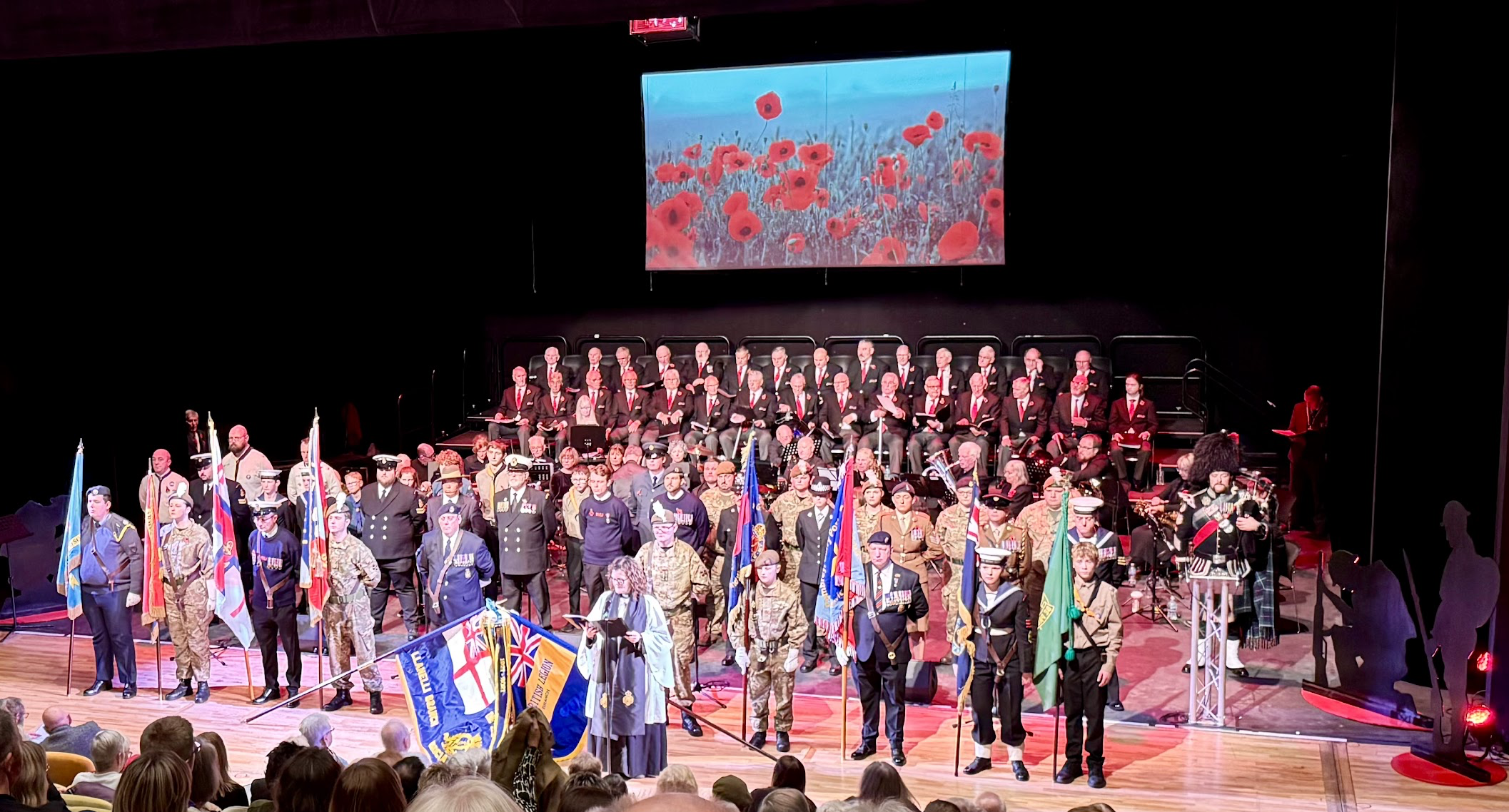
It would be hard to think of a better way to end a week of Remembrance than this special festival staged at Llanelli’s Ffwrnes Theatre.
It was an evening which provided just the right measures of tribute, respect, dignity and emotion.
And it was fitting that it ended with a special presentation to Royal British Legion Llanelli branch president Ray Batsford, a veteran who has provided years of sterling service to the community.
The Llanelli branch of the RBL is in fine shape, on the evidence of a Poppy Appeal estimated to have raised £24,000 locally this year.
The branch’s organisation of the Festival of Remembrance was magnificent from start to finish, helped by the Rev Eldon Phillips as compère and Cerith Owens as artistic director.
The highlight of the evening was an impressive Drumhead Service of Remembrance, conducted by RBL Llanelli branch chaplain the Rev Delyth Richards. The silence was impeccably observed and there were many tears shed among the audience.
The festival was blessed with musical support from the Carmarthen Symphonic Wind Band, performing under the baton of their new musical director, Rhodri Rutherford.
On a day when Welsh pride and passion were well to the fore, it was appropriate that Meibion Elli should bring their own brand of powerful and emotional male voice singing to the stage.
The evening began with the muster of banners, with the symphonic band providing the musical background of Great Little Army and Arromanches.
Meibion Elli’s first set, under musical director D Eifion Thomas, included the powerhouse Gwahoddiad, the Welsh version of Anthem from Chess and the Elvis Presley classic Precious Lord. The featured soloist was award-winning baritone John ‘Pontyberem’ Thomas.
The first soloist of the evening was Scott Holmes, a member of the Llanelli-based Loud Applause Rising Stars team. He was totally tuned in to the emotion of the evening with performances of Bui Doi (Dust of Life) from Miss Saigon and the classic Empty Chairs at Empty Tables from Les Misérables.
The youngsters of Ysgol Bryngwyn Comprehensive School, drawn from Years 7 to 11, were a delight, with a set which included When I Grow Up from Matilda and John Lennon’s classic Imagine.
The Carmarthen Symphonic Wind Band took centre stage with The Great Escape, Tell My Father, featuring Rhodri Rutherford, Dafydd y Garreg Wen and Jitterbug.
Soloist Betsan Daniel, also a member of Loud Applause Rising Stars, was a late replacement for the unwell Lauren Elizabeth Williams, but she displayed wonderful composure with A Nightingale Sang in Berkeley Square and Adre, the celebrated Caryl Parry Jones tear-jerker.
The wind band stirred the soul with Elgar’s Nimrod, before Meibion Elli concluded with You’ll Never Walk Alone, Ashokan Farewell and The Mansions of the Lord.
David Blewitt, pipe major of the City of Swansea Pipe Band, provided bagpipe accompaniment to the Service of Remembrance, which included the hymns Efengyl Tangnefedd and O God, Our Help in Ages Past.
There were prayers before the Exhortation, the Last Post, the Silence and the Kohima Epitaph. The festival also featured an emotional poetry reading by Welsh Guards veteran Chris Beynon and a short speech by Geraint Davies reflecting on the Iraq War.

Find out more about the Royal British Legion’s work locally on the Friends of The Royal British Legion – Llanelli Branch Facebook page.
Main image: The Rev Delyth Richards conducts the Drumhead Service of Remembrance at Ffwrnes Theatre, Llanelli (Image supplied).
Jay Francis Cockburn was sentenced to 12 weeks after admitting a breach involving missed probation and treatment appointments
A DRUG-DRIVER has been jailed for 12 weeks after repeatedly failing to comply with a community order imposed for offences in Ceredigion.
Jay Francis Cockburn, 35, of no fixed abode, admitted the breach at a hearing on Monday (November 9).
He was at Haverfordwest courthouse but appeared before a Llanelli magistrates’ bench, according to the court register.
The proceedings concerned a community order made at Aberystwyth Magistrates’ Court on July 1. Cockburn had been convicted in October 2025 of two drug-driving offences arising from the same incident at Llanafan on July 3 that year.
He had driven a Ford Mondeo with controlled substances in his blood above the specified limits.
The breach proceedings listed failures to comply with a planned home visit on August 4, a drug rehabilitation appointment on October 2 and supervision appointments on October 6, October 20 and November 3.
Magistrates revoked the community order and re-sentenced Cockburn for the original offences, imposing two 12-week prison terms to run at the same time.
In their recorded reasons, the bench described his failure to comply as wilful and persistent and said the driving could have had devastating consequences.
The court concluded that his failure to comply with previous community orders for the offence demonstrated an unwillingness to engage with probation, and that the prison sentence could not be suspended.
No order was made for costs.

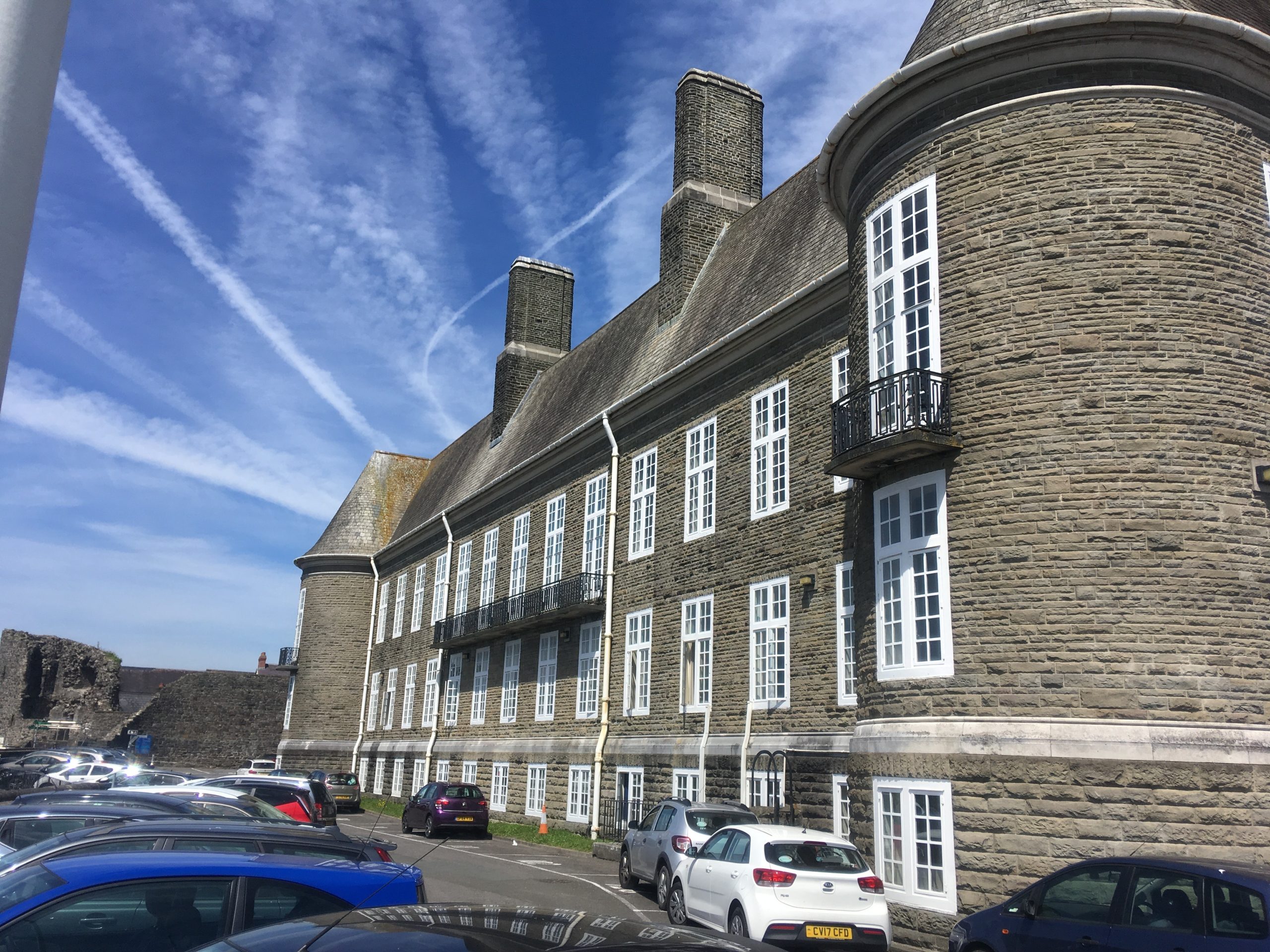
Carmarthenshire Council’s HQ at County Hall (Pic: Richard Youle)
Councillors seek an urgent plan with Hywel Dda to provide nursing support for pupils with complex medical needs
PERMANENT nursing should be available at all specialist additional learning needs (ALN) facilities in Carmarthenshire, according to councillors.
They backed a motion brought by Labour councillors Martyn Palfreman and Edward Skinner which said pupils in such venues often needed complex medical interventions during the school day.
“These include tube feeding, catheterisation, tracheotomy care, monitoring and responding to seizures, and the timely administration of prescribed rescue medication,” it said.
“Despite the dedication of educational staff in such establishments, who provide outstanding care for pupils and have undertaken training to meet individual healthcare needs, it should be recognised that they are not medically qualified.
“As such, they should not be expected to be responsible for recognising clinical deterioration, assessing complex medical symptoms or responding to potentially life-threatening medical emergencies that arise during school time.”
There was particular focus on Ysgol Heol Goffa, Llanelli, where many pupils have very complex needs and where, according to the motion, the head teacher has sought permanent onsite nursing provision for more than five years.
“Parents have expressed serious and continuing anxiety about the safety of their children in the absence of a registered nurse permanently based on site,” it said.
Discussions have taken place between the council and Hywel Dda University Health Board and the motion called for an urgent meeting between them and other parties in a bid to agree a “funded and time-bound plan”.
The motion also said a jointly-commissioned clinical risk assessment for every pupil with complex or life-limiting medical needs should be done immediately.
Speaking at a meeting of full council Cllr Palfreman said providing the right support could in some cases “can be a matter of life or death”. He and others praised the work of teachers and teaching assistants.
Cllr Crish Davies said: “Every parent deserves peace of mind that comes from knowing that their child is in safe hands.” Some of them, she said, lived with worries “we can barely imagine”.
Cllr Deryk Cundy said five children at a special school had palliative care, seven had feeding valves, three had shunts, and 22 had epilepsy. He added that many children could not articulate their concerns.
Cllr Gareth John said he supported the motion with two reservations – that it was logical for the outcome of discussions between the council and the health board to reach an outcome before cabinet discussed the motion, should it be approved, and an acknowledgement the council could lobby but couldn’t create a health workforce “that may not even exist”.
Cllr Jane Tremlett, cabinet member for integrated health and children and adult services, said: “Every child with complex needs should be able to attend school safely, with dignity and with confidence that the appropriate support is available if they need it.”
She said school staff shouldn’t be expected to be healthcare professionals. “We need absolutely clarity about where professional responsibility sits and how that provision is commissioned and funded,” she said.
She said different schools might need different models of provision, and added: “What matters is it’s safe, clinically approved and sustainable.”
Cllr Glynog Davies, cabinet member for education, called on the health board “to take up their responsibility seriously” and said the Welsh Government should provide clarity on what they expected councils to provide.
Responding to the motion, Sharon Daniel, director of nursing, quality and patient experience at Hywel Dda University Health Board, said: “The health and wellbeing of all children and young people is fundamental to their ability to learn, thrive and reach their potential, and is a priority for us.
“We support the children and young people at Ysgol Heol Goffa with a specialist/community children nursing service to meet their universal health needs, and through the provision of training for staff at the school.
“We provide specialist support, ensuring each child and young person with healthcare needs can be cared for competently and confidently within the school environment. Through continued partnership working and a shared commitment to improvement, we will support ongoing actions to strengthen provision and ensure the best possible outcomes for the pupils and staff at Ysgol Heol Goffa.”
-

 Community1 day ago
Llanelli Festival of Remembrance brings week to an emotional close
-
 News1 week ago
Gateway Resort owner loses appeals over glamping pods and clubhouse extensions
-
 Education4 days ago
Carmarthenshire councillors call for permanent nursing at special schools
-

 Education3 weeks ago
BT Work Ready programme helps Llanelli pupils build skills for future careers
-
 Education1 week ago
Llanelli special school pupils welcome plans for larger school with outdoor space
-

 Business1 week ago
Fast Forward sets its sights on the next stage of growth
-
 News12 months ago
Llanelli Town AFC women’s team secures new sponsor
-
 News8 months ago
Boxer plans move to Llanelli church to expand community club