
Education
Pupils at Ysgol y Bedol in Garnant, Ammanford where community is at the heart of everything they do

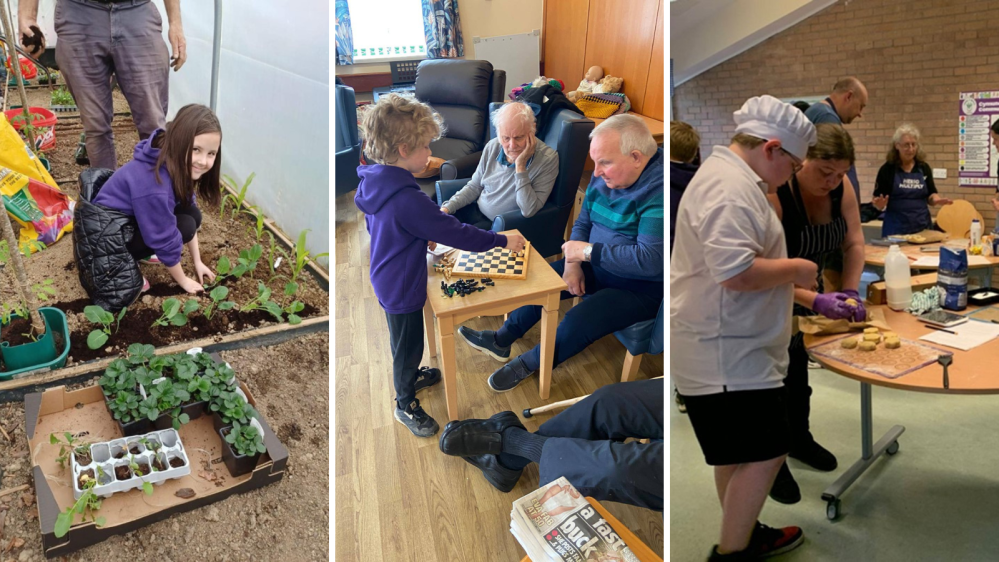
Pupils at Ysgol y Bedol in Garnant, Ammanford where community is at the heart of everything they do
OVER 100 educators from across Wales came together today (Monday, 31 March) for a Community Focused Schools Conference in Carmarthen.
Organised by British Council Wales and the Welsh Government, the event showcased how community-based projects are transforming education and local communities, with international speakers also sharing their experiences and insights.
Among the schools featured was Ysgol y Bedol in Garnant, Ammanford. The primary school, situated in a former coal mining village, has built a deep connection with the local community, breathing new life into the area.
Established 20 years ago as part of the Welsh Government’s 21st-Century Schools Initiative, Ysgol y Bedol was designed with community use in mind. It includes facilities such as a community library, police room, gym, sports hall, and café.
They run a range of community-focused projects, including an intergenerational initiative that pairs students with elderly residents from a nearby day centre to engage in games and activities.
Headteacher Gethin Richards explained: “Our school has always been built with the community at its heart. From day one, we’ve made sure the school isn’t just an educational space but a true community space.
“It’s not just about teaching children here; it’s about fostering something bigger. What we’re seeing in this initiative is that the older generation are feeling more part of the community, and the students also get to learn from their stories and experiences.”
In addition, the school has established a café that serves not only the school community but also contributes to supporting local causes. Students actively participate in preparing food, growing produce, and organising events. The school also runs a “food and fun” club during the summer holidays, providing meals and activities for children from disadvantaged backgrounds.
Gethin continued: “It’s all about connecting with people. By involving our students in activities like this, they learn the value of being part of a community and the impact they can have on the people around them.”
To support these initiatives, the school has been creative in generating funding. Through its community-driven activities, it’s able to reinvest back into the school. Gethin explains, “We’ve created activities like the café that not only engage the students but also help fund the school activities. We use those funds to support everything from school trips to enhancing student resources.”
The school has also forged partnerships with local organisations, such as a nearby wind farm, to support environmental and educational projects. This collaboration has enabled the school to develop a garden, chicken coop, and polytunnel, providing students with valuable hands-on learning experiences.
Gethin concluded: “We’re not just teaching in a classroom. We’re involving the students in real-world projects that have a positive impact on the environment and the community.
“These partnerships allow the students to connect what they’re learning to the world around them.”
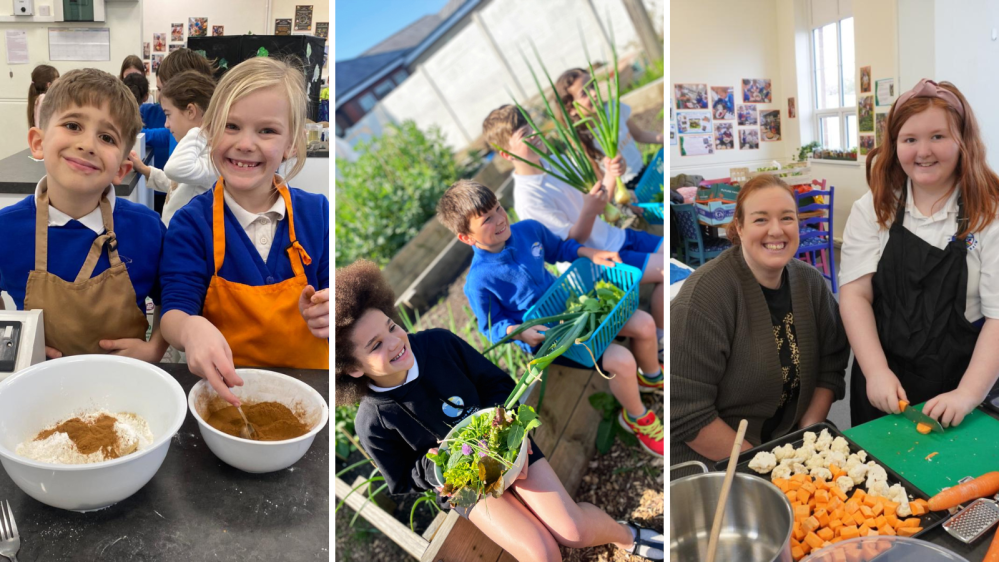
For Lucy Lock, a Year 3 teacher and curriculum lead at Ysgol Bro Banw Primary school in Ammanford, they have worked hard to make sure the school is a true hub for the entire community, involving pupils in food waste projects, community meals, and growing food.
Lucy explained: “For us, it really began with the Welsh Government’s Big Bocs Bwyd scheme, which was one of the first steps in making our school a hub for the community.
“The idea behind Big Bocs Bywds was to engage young people who were struggling to connect with traditional education. By working on hands-on projects and learning in a more practical, real-world context, these students started to build their confidence and skills in ways that resonated with them.
“From there, we expanded our work, collaborating with the charity Foodshare to address food insecurity. It’s one less worry for families, helping ensure that students can focus on their learning rather than being distracted by hunger.
“The positive impact of Foodshare on both students and families has been huge, reducing barriers to education and making a real difference in the community,” said Lucy.
For Lucy, an important part of the project was adopting food literacy into the curriculum.
She said: “We recognised that teaching children about food—not just how to cook, but understanding where it comes from, how it affects our health, and how to make healthier choices—was vital.”
Students at the school are also leading initiatives like the Waste Wizards programme, focused on sustainability, and a pupil-led café, which provides hands-on learning in cooking, customer service, and business management.
Lucy said: “These initiatives empower students with practical work experience, teaching them skills in cooking, customer service, and financial management.
“It’s all about giving students ownership of the project. They make decisions, take responsibility, and learn life skills through trial and error.
“The active involvement of parents and volunteers has been integral to the success of these initiatives. Many parents and community members have contributed their time and expertise and played a critical role in the broader network of support we’ve built.”
To further expand its work with the community, the school recently secured Lottery funding to create a new state-of-the-art kitchen.
Lucy said: “This kitchen will allow us to expand our community programmes, offering opportunities for students to learn about cooking and nutrition while also providing a space for local cooking classes and community events.
“Throughout all of this, we’ve stayed committed to celebrating the cultural diversity within our school, we’re working to ensure that every student, regardless of their background, feels valued and supported.
“This is about more than just education. It’s about creating an environment where every child can thrive, feel secure, and be part of something bigger than themselves.”
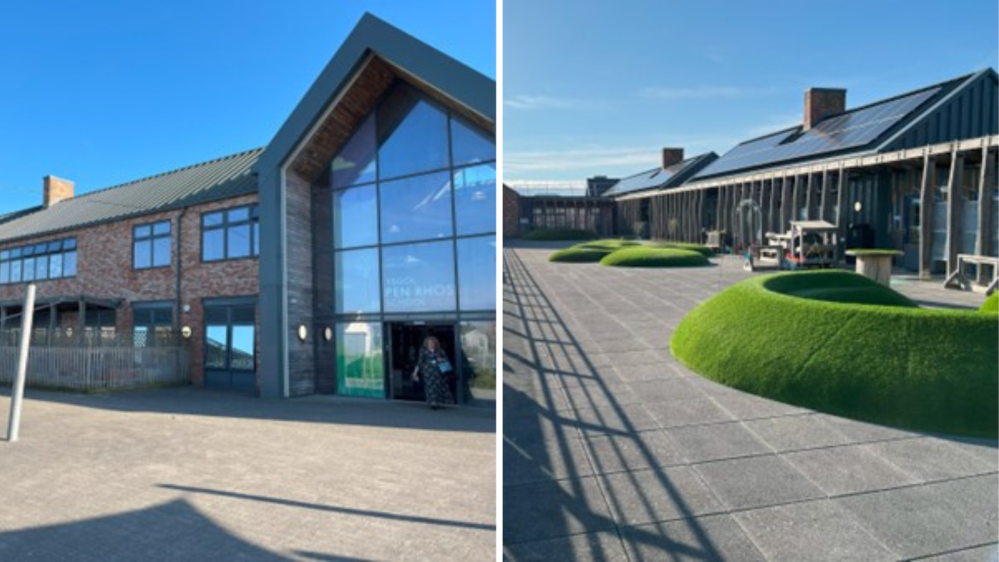
Meanwhile, at Ysgol Pen Rhos in Llanelli, Headteacher Joe Cudd is using innovative approaches to strengthen community ties. The school, which is based in an area identified as being severely deprived, seeks to ensure pupil voice, family engagement and wellbeing is at the heart of the school ethos.
Joe said: “We believe that families are the first educators, and our role is to support them while empowering our pupils to make a difference. Our work is about more than just traditional education.
“For instance, we lead innovative programmes such as using Minecraft to teach students about climate change, and our beekeeping programme isn’t just about sustainability; it’s also helping to support mental health.
“One of the most impactful projects we’ve undertaken involved bowel cancer awareness. In our community, the uptake of bowel cancer screenings was very low. So, we ran the Moon Dance Cancer Initiative, where primary school children worked with a leading colorectal surgeon to learn about colorectal cancer, its signs, and symptoms.
“They then took that message out into the community, which led to a significant increase in bowel screening uptake. It’s a great example of how children can be powerful advocates for their community.”
In addition to these grassroots efforts, Ysgol Pen Rhos is also at the forefront of using AI to drive community transformation.
Joe said: “Through AI, we analyse local demographic data to better understand community needs and create actionable plans. Currently, we’re working with three schools in Wales to develop a model that other headteachers can adopt to drive community-focused initiatives.
“Our goal is to make sure that every school is not just a place for academic learning, but a driving force for positive change in the community.
“At the end of the day, these initiatives are all about making sure that our school isn’t just a place for academic learning but a vital part of the community, helping the children and their families thrive in every possible way.”
The Community Focused Schools conference was also attended by keynote speakers Lee Elliot Major, Professor of Social Mobility at the University of Exeter, and Michelle Dolan, Principal of St Louis Secondary School in Dundalk, Ireland.
Nicola Edwards, Deputy Director of the Equity in Education Division at the Welsh Government, opened the event and Lynne Neagle, Cabinet Secretary for Education, provided a welcome message.
Speaking about Community Focused Schools, Lynne Neagle, Cabinet Secretary for Education, said: “I want all schools in Wales to be Community Focused Schools. This is why I am so pleased to be investing over £31m in Community Focused Schools approaches and facilities this financial year.
“By working together to share ideas, best practice and research from across Wales and other countries we can continue to drive forward the Community Focused Schools agenda, helping secure the best foundations for the learning and development of children and young people right across Wales.”
This marks the third Community-Focused Schools Conference in Wales organised by British Council Wales, following successful events in Cardiff and Wrexham. The conference continues to provide a vital platform for sharing knowledge, fostering collaboration, and inspiring further community engagement in education.
Ruth Cocks, Director of British Council Wales, added: “We are proud to support and celebrate the work of schools in Wales that are making a tangible difference in their communities.
“These initiatives highlight the power of education to bring people together and drive meaningful social change. By bringing renowned delegates together with local leaders and educators, we can share best practices and build a global network of innovation and collaboration.
“Together, we can shape the future of education in Wales and nurture the potential of every learner.”
Find out more about British Council Wales’ work in Wales by clicking here or follow on X, Facebook, or Instagram.
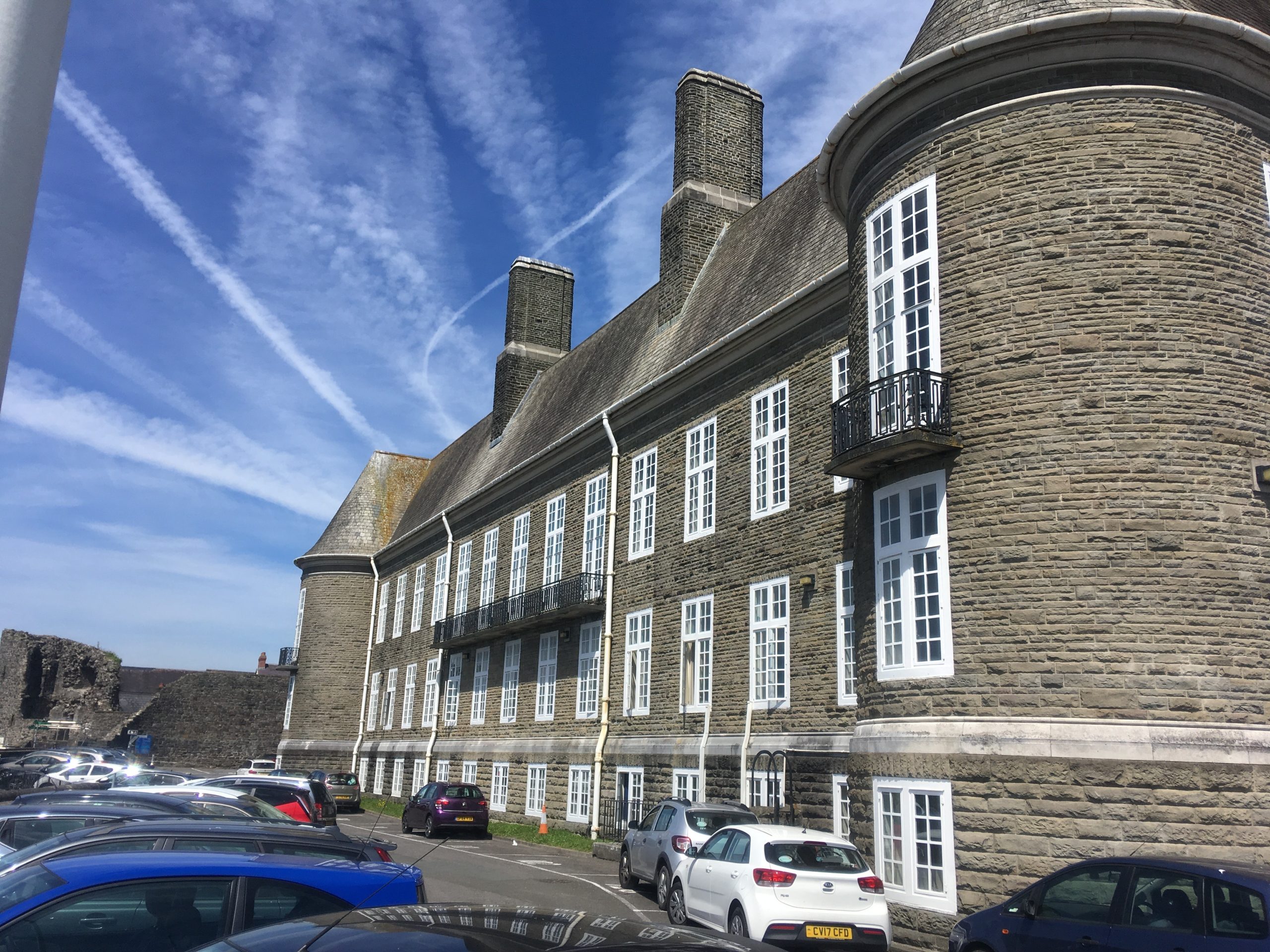
Carmarthenshire Council’s HQ at County Hall (Pic: Richard Youle)
Councillors seek an urgent plan with Hywel Dda to provide nursing support for pupils with complex medical needs
PERMANENT nursing should be available at all specialist additional learning needs (ALN) facilities in Carmarthenshire, according to councillors.
They backed a motion brought by Labour councillors Martyn Palfreman and Edward Skinner which said pupils in such venues often needed complex medical interventions during the school day.
“These include tube feeding, catheterisation, tracheotomy care, monitoring and responding to seizures, and the timely administration of prescribed rescue medication,” it said.
“Despite the dedication of educational staff in such establishments, who provide outstanding care for pupils and have undertaken training to meet individual healthcare needs, it should be recognised that they are not medically qualified.
“As such, they should not be expected to be responsible for recognising clinical deterioration, assessing complex medical symptoms or responding to potentially life-threatening medical emergencies that arise during school time.”
There was particular focus on Ysgol Heol Goffa, Llanelli, where many pupils have very complex needs and where, according to the motion, the head teacher has sought permanent onsite nursing provision for more than five years.
“Parents have expressed serious and continuing anxiety about the safety of their children in the absence of a registered nurse permanently based on site,” it said.
Discussions have taken place between the council and Hywel Dda University Health Board and the motion called for an urgent meeting between them and other parties in a bid to agree a “funded and time-bound plan”.
The motion also said a jointly-commissioned clinical risk assessment for every pupil with complex or life-limiting medical needs should be done immediately.
Speaking at a meeting of full council Cllr Palfreman said providing the right support could in some cases “can be a matter of life or death”. He and others praised the work of teachers and teaching assistants.
Cllr Crish Davies said: “Every parent deserves peace of mind that comes from knowing that their child is in safe hands.” Some of them, she said, lived with worries “we can barely imagine”.
Cllr Deryk Cundy said five children at a special school had palliative care, seven had feeding valves, three had shunts, and 22 had epilepsy. He added that many children could not articulate their concerns.
Cllr Gareth John said he supported the motion with two reservations – that it was logical for the outcome of discussions between the council and the health board to reach an outcome before cabinet discussed the motion, should it be approved, and an acknowledgement the council could lobby but couldn’t create a health workforce “that may not even exist”.
Cllr Jane Tremlett, cabinet member for integrated health and children and adult services, said: “Every child with complex needs should be able to attend school safely, with dignity and with confidence that the appropriate support is available if they need it.”
She said school staff shouldn’t be expected to be healthcare professionals. “We need absolutely clarity about where professional responsibility sits and how that provision is commissioned and funded,” she said.
She said different schools might need different models of provision, and added: “What matters is it’s safe, clinically approved and sustainable.”
Cllr Glynog Davies, cabinet member for education, called on the health board “to take up their responsibility seriously” and said the Welsh Government should provide clarity on what they expected councils to provide.
Responding to the motion, Sharon Daniel, director of nursing, quality and patient experience at Hywel Dda University Health Board, said: “The health and wellbeing of all children and young people is fundamental to their ability to learn, thrive and reach their potential, and is a priority for us.
“We support the children and young people at Ysgol Heol Goffa with a specialist/community children nursing service to meet their universal health needs, and through the provision of training for staff at the school.
“We provide specialist support, ensuring each child and young person with healthcare needs can be cared for competently and confidently within the school environment. Through continued partnership working and a shared commitment to improvement, we will support ongoing actions to strengthen provision and ensure the best possible outcomes for the pupils and staff at Ysgol Heol Goffa.”
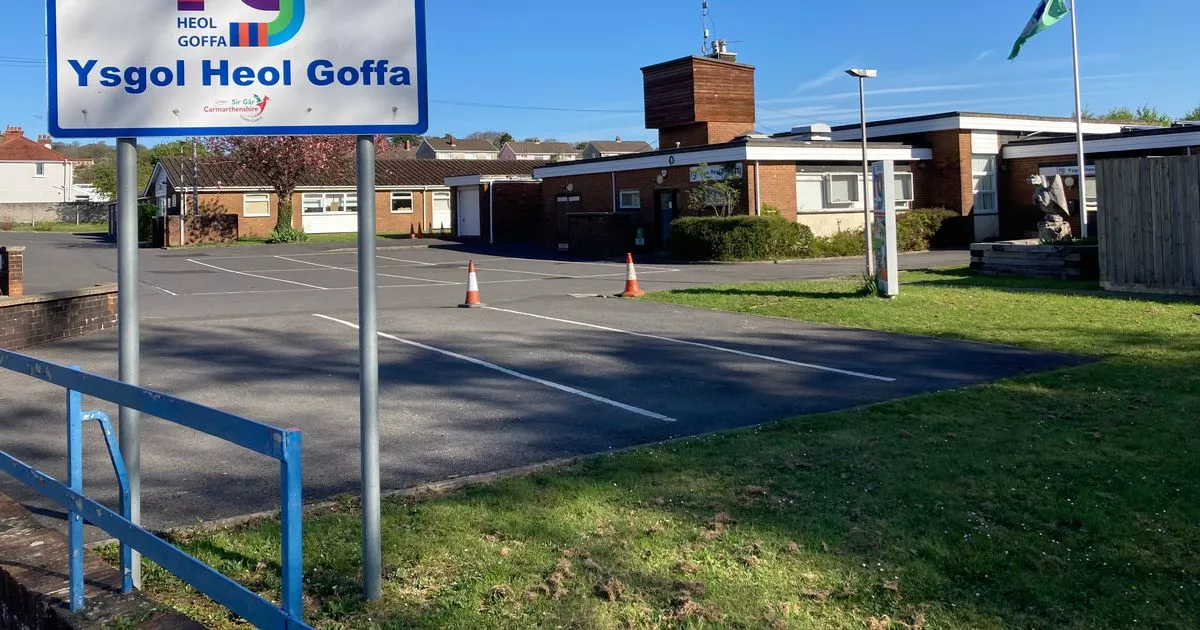
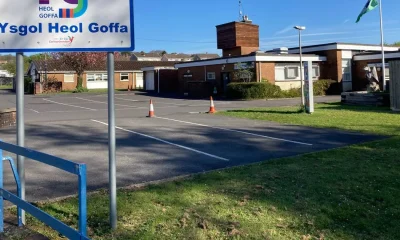
Ysgol Heol Goffa, Llanelli (Pic: Richard Youle)
PUPILS at a special school in Carmarthenshire have expressed strong support for a new, larger school and are particularly keen on outdoor space.
Fifteen Ysgol Heol Goffa learners responded to a council consultation about relocating the Llanelli school to a new site in the town.
Their feedback was contained a report before cabinet members who voted to press ahead with the next phase of the relocation process.
The report said the teenage pupils were enthusiastic about larger classrooms and improved facilities and wanted adequate outdoor areas for socialising and physical activity. They also sought reassurance that the proposed 150-place school would be big enough to meet future demand.
The new school would be on council-owned land by Ysgol Pen Rhos – just under two miles from its current location. The planned move, subject to funding and other approvals, would be in September 2029.
Pupils had previously looked forward to a new 120-place Ysgol Heol Goffa when plans for a new one were unveiled in early 2023 but that scheme was subsequently shelved on cost grounds.
Speaking at a cabinet meeting on November 2 Cllr Glynog Davies, cabinet member for education, said Ysgol Goffa “means so much to so many people” and that upgrading the current site would be unacceptable and impossible with pupils and staff there.
Cllr Davies said 75% of the funding for the new school could come from the Welsh Government. “I’m very hopeful that that will happen,” he said.
High cost elements of the previous design such as a hydrotherapy pool have been removed.
Ysgol Heol Goffa has 118 places but it had 132 registered pupils as of January this year.
There were 46 responses by adults to the consultation, of which 42 supported the proposal and four did not – mainly around the proposed school’s capacity. Inspection body Estyn was also supportive.
Cllr Jane Tremlett, cabinet member for integrated health and children and adult social services, said she’d seen the excellent work done at Ysgol Heol Goffa during a visit some years ago.
“I also know the need for a new school with improved facilities for pupils, staff and greater capacity to meet demand,” she said.
The Plaid-Independent-led authority will now publish what’s called a statutory notice which gives people another opportunity to object.
This will be considered by cabinet prior to a final decision by full council.
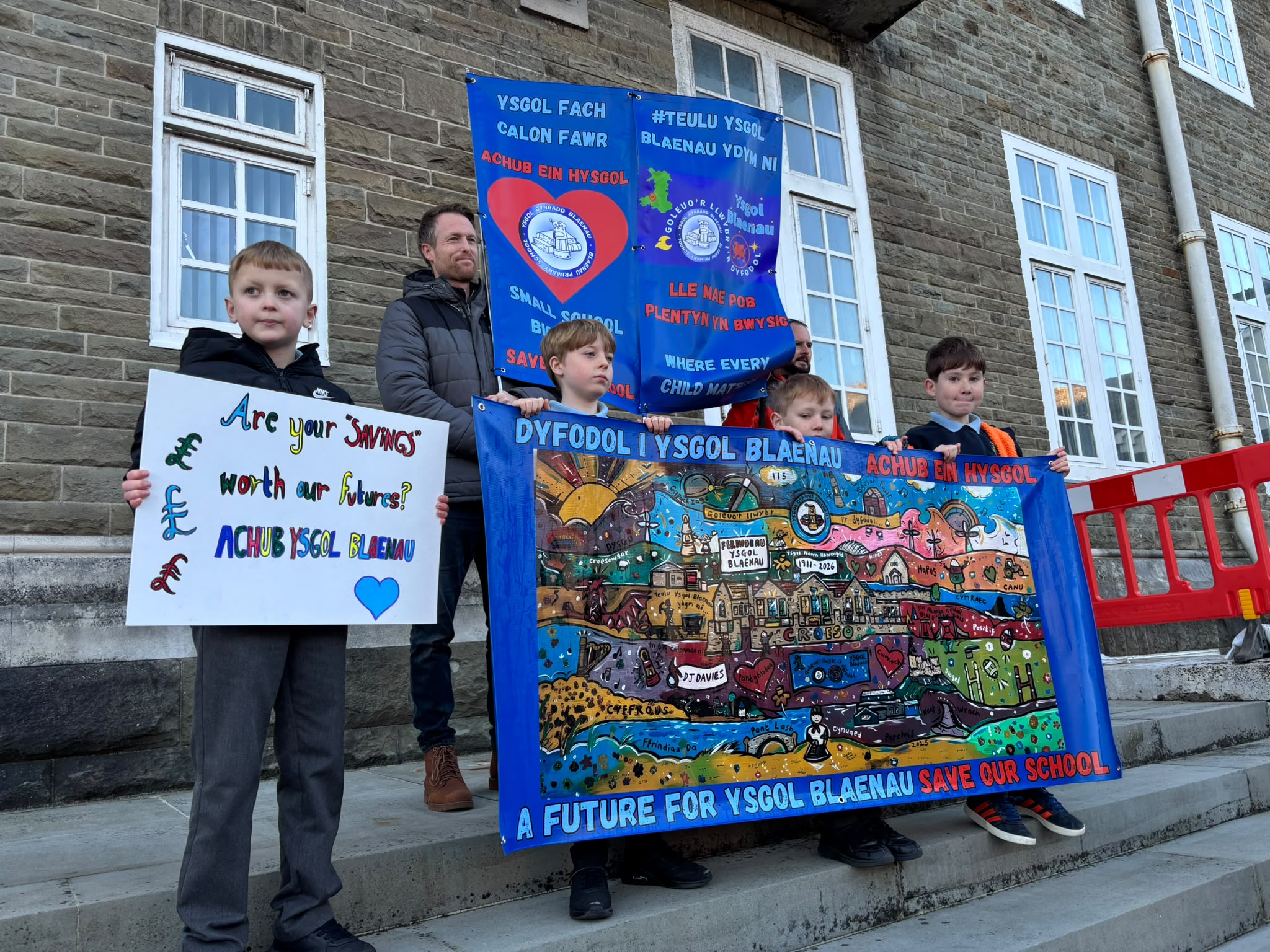
Ysgol Blaenau pupils and parents at County Hall, Carmarthen, on November 2 (Pic: Cymdeithas yr Iaith)
FOUR rural schools are another step closer to shutting in Carmarthenshire.
The council’s cabinet has voted in favour of a formal consultation recommending Ysgol Blaenau, Ysgol Pontiets, Ysgol Carwe and Ysgol Bancffosfelen close at the end of December 2027.
Placard-waving parents and pupils stood on the steps of County Hall, Carmarthen, before the meeting urging cabinet to save their schools. “Are your ‘savings’ worth out futures?” read one placard about Ysgol Blaenau, near Llandybie.
No binding decisions, however, have been made and it’ll full council that has the final say.
Although the individual circumstances of the four primaries are different the council is worried about declining pupil numbers, high surplus places, the condition of some school buildings, and current or projected financial deficits.
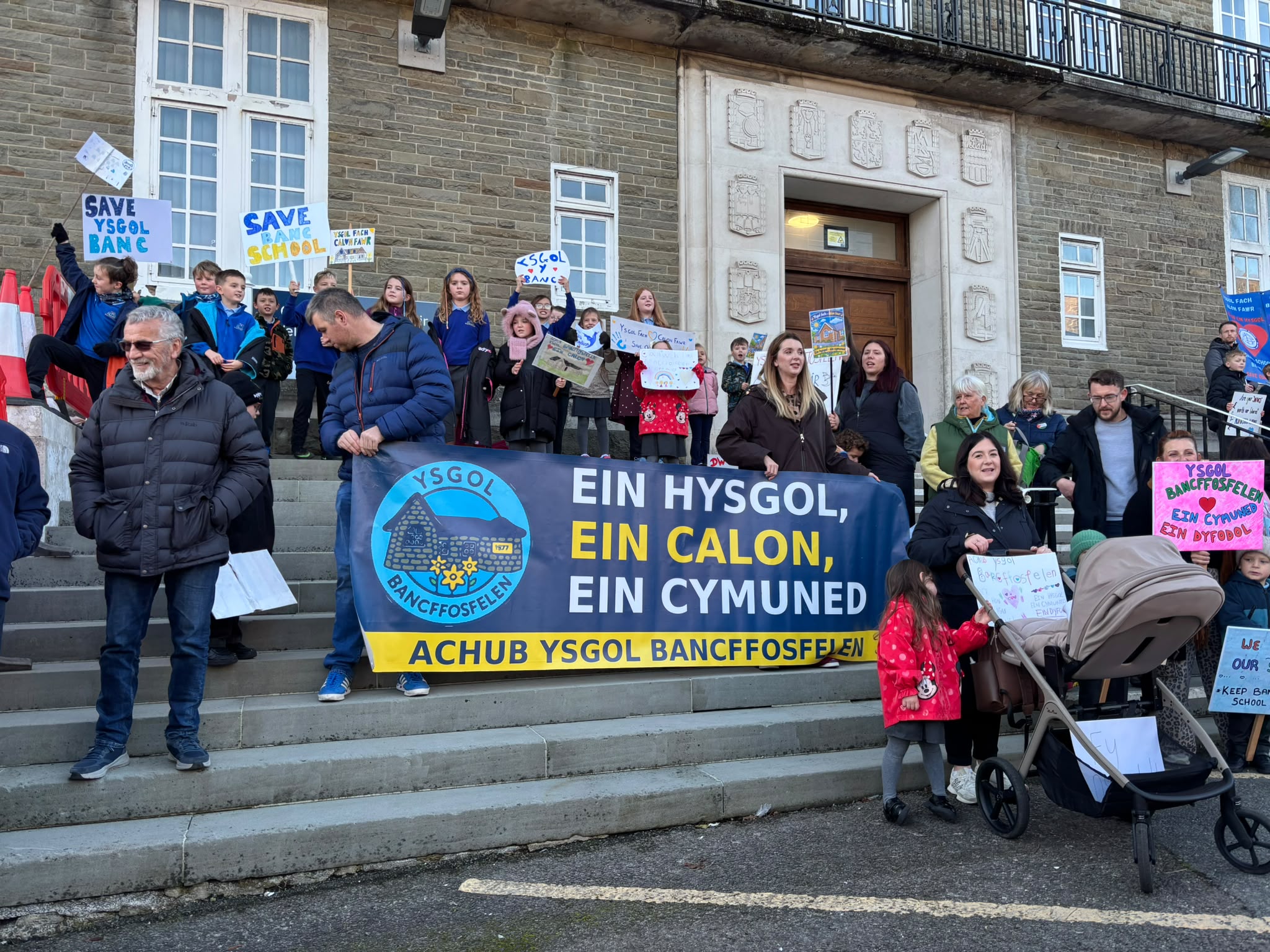
Councillors representing the four schools put the concerns of parents and pupils, including the question of closing a school during the academic year, to cabinet as it considered and voted in favour of the closure consultation for each school in turn.
Cllr Glynog Davies, cabinet member for education, said at the outset that the authority had to meet “the needs of a community not just a village” and address growing financial deficits accumulating in many of the county’s schools. “Accepting the status quo is not an option,” he said.
One primary has already closed in the county this year and two more will shut at the end of next month.
Cllr Davies also said school closures would in principle be at the end of an academic year from now on, although he said there may be circumstances when a different date may be appropriate.
Referring to Ysgol Blaenau, he said it currently had 21 registered pupils and 98 spaces, with 41 pupils from the catchment attending schools elsewhere. The school’s forecast deficit at the end of 2026-27, he said, was £362,556.
Cllr Davies cited a 2024 report by inspection body Estyn which said school governors hadn’t addressed the deficit effectively enough, which ward councillor Dai Thomas disputed.
Cllr Thomas said the debt had built despite governors taking difficult decisions including redundancies. Suggesting governors were responsible for the deficit, he said, was “simply untrue”.
He said Ysgol Blaenau was a happy and successful school with dedicated staff committed governors, not “just a budget deficit or set of buildings”, and that it deserved better.
He said: “Please give this school the opportunity it needs to survive and succeed”.
After the vote was taken, Cllr Davies spoke about Ysgol Pontiets, Pontyates, which had 16 pupils and 83 spaces, with 41 children from the catchment going to schools elsewhere. The deficit forecast at the end of 2026-27 is £80,469.
Ward councillor Alex Evans said he had serious doubts about the consultation document and claimed deficiencies in it could open up the council to a “credible judicial challenge”.
He also asked what assessment had been done to establish whether the B4317 was a safe route to school given that Pontiets pupils would transfer to Ysgol Ponthenri a mile away. He said there was a 50mph speed limit on the road and a lack of street lighting.
Cllr Edward Thomas, cabinet member for transport, said a technical desktop assessment had been carried out and that further work and improvements would be needed regarding the road should Ysgol Pontiets close.
The meeting then heard about Ysgol Carwe, Carway, which has been shut temporarily since September 2025 due to serious building issue with pupils relocating to Ysgol Gwynfryn.
Cllr Davies said this problem had occurred overnight and that there had been no choice but to close it. Reopening the school, he said, would cost more than £2 million.
Ysgol Carwe had 58 pupils as of January this year, 118 spaces and a 2026-27 deficit forecast of £23,143.
Ward councillor and long-serving school governor Tyssul Evans asked cabinet to respond to concerns in the community that the building problems in part of the school were being used as an excuse to close it. Investment in Ysgol Carwe, he added, had been promised.
Cllr Evans also said the school was not currently in deficit and that steps had been taken to cut costs. He said: “And now we are being punished for that.” He added. “Who is managing this council – the administration or the officers?”
Cllr Linda Evans, leader of the Plaid-Independent administration, said a range of criteria was considered by cabinet not just the condition of buildings, and that people could raise concerns as part of the proposed consultation.
Then another ward councillor, Meinir James, addressed cabinet to ask what the impact would be on the Welsh language of closing three Welsh language schools in the vicinity, as was proposed, and whether all sources of funding had been explored including grants to invest in Ysgol Carwe.
Cllr Davies replied saying funding opportunities “are routinely explored where appropriate” but that in Ysgol Carwe’s case “wider challenges” would still exist with the school although he agreed it was not currently in the red.
Turning finally to Ysgol Bancffosfelen, Cllr Davies said it had 48 pupils as of January this year and 98 places – although this latter number will come down to 86 – and 41 children from the catchment attending schools elsewhere. The budget deficit for the end of 2026-27 is forecast to be £107,733.
Cllr Davies said he had concerns about buildings at the part-Victorian school but not about the leadership – and added that a new Estyn report would be published at the end of the month.
Ward councillor Liam Bowen said there were currently 50 pupils, a team of hard-working staff and that the school had grown. He said he was disappointed in the unwillingness of cabinet to discuss things with him and that there were 19 schools in the county with fewer pupils than Ysgol Bancffosfelen, 16 of which were forecast to be in the red.
The meeting heard that investment would be made in receiving school Ysgol Pontyberem to increase capacity.
Cabinet member for resources, Cllr Alun Lenny, said the school strategy being implemented by the administration was to modernise education.
“We have to consider whether buildings from the Victorian age are suitable for the 21st Century,” he said.
-

 Community1 day ago
Llanelli Festival of Remembrance brings week to an emotional close
-
 News1 week ago
Gateway Resort owner loses appeals over glamping pods and clubhouse extensions
-
 Education5 days ago
Carmarthenshire councillors call for permanent nursing at special schools
-

 Education3 weeks ago
BT Work Ready programme helps Llanelli pupils build skills for future careers
-
 Education2 weeks ago
Llanelli special school pupils welcome plans for larger school with outdoor space
-

 Business1 week ago
Fast Forward sets its sights on the next stage of growth
-
 News2 weeks ago
Consultation opens on plans for eight new stations and expanded rail services
-
 Community3 months ago
Llanelli’s dated office block to become affordable flats with rooftop garden